1
2.2
Encoding the whole message
Next we turn to the task of encoding an entire message. One simple method would be to simply start at
the beginning of the image, encoding each pixel in turn until the message is exhausted, then encode some
sort of "end of file" sentinel value. That way, when recovering the message, we would know when to
stop decoding pixels. This would be easy to implement, but it has the disadvantage of bunching all of the
message pixels at the top of the image, which may be easier to detect.
The method we use instead is to distribute message pixels throughout the image, by dividing the available
pixels by the length of the message, and then only "sprinkling" message characters at that regular interval.
This requires a little bit more machinery to implement, as now we need a way of performing this selective
alteration. On top of that, in order to recover a particular message, we need to be able to recover the
spacing interval.
In order to accomplish this, we encode the length of the message in the first three pixels of the image.
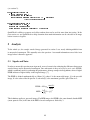
Given that 7 bits per pixel are used for encoding, this affords us a maximum message length of
2(7·3) − 1 ≈ 2.1 million characters.
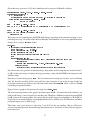
We define two functions for handling the length decoding/encoding, as well as a constant for the maximum
length (it will be used in other places as well):
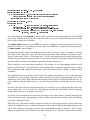
maxLength
= 2^21 - 1
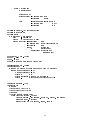
encodeLength :: Int -> [Pixel] -> [Pixel]
decodeLength :: [Pixel] -> Int
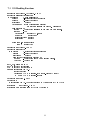
The implementation of these functions can be found in the appendix.
Now we turn to the question of how to evenly distribute the message throughout the image. First we must
choose a representation of images. We use a simple data structure that contains the height, the width, and
the image data (as a list of lists of pixels):
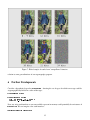
data Image = Image {height :: Int, width :: Int, pixels :: [[Pixel]]}
deriving (Show, Eq)
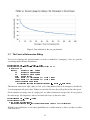
It is also helpful to define a function for giving us the number of pixels in an image available for encoding
(which is all of them, except the ones used for the length):
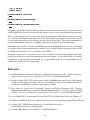
headerLength = 3
availPix
:: Image -> Int
availPix img = height img * width img - headerLength
We then take the following approach. At each pixel in the image, examine its index (starting from zero). If
the index is aligned with the spacing, encode a character from the message. Otherwise, do nothing. This
approach suggests the need to maintain some state information: the current index, the remaining message
characters, and so forth.
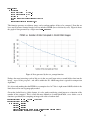
To that end, we introduce a simple state manipulation monad [4], as well as a Sprinkler datatype to store
the relevant state information:
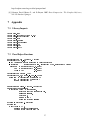
newtype ST s a = ST {run :: s -> (a, s)}
instance Monad (ST s) where
return x = ST (\s -> (x, s))
3