1
Network Considerations
23.3 Understanding Compaq TCP/IP Services for OpenVMS
•
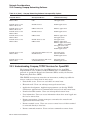
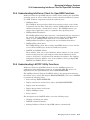
Remote printing. Users can send or receive print jobs to or from remote
printers.
•
Remote file copy. Users can copy files that reside on remote hosts.
•
Remote booting. Servers can provide boot information for remote clients.
Internetworking with TCP/IP hides the hardware details of each individual
network and allows computers to communicate independently of their physical
network connections. TCP/IP provides both a standard transport mechanism and
full-duplex, reliable, stream communication services for software applications.
Compaq TCP/IP Services for OpenVMS software provides interoperability and
resource sharing between OpenVMS systems, UNIX systems, and other systems
that support the TCP/IP protocol suite and Sun Microsystems’ Network File
System (NFS). TCP/IP systems and other internet hosts share data and resources
by using standard TCP/IP protocols over a number of network hardware
configurations: Ethernet, Fiber Distributed Data Interface (FDDI), Token Ring,
and asynchronous transfer mode (ATM).
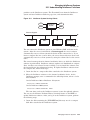
Each end system connected to a TCP/IP network is called a host. Each host
has a unique name and address. The local host is the system you are using, and
the remote host is the system with which you are communicating. Hosts are
connected by lines that carry information between the hosts. The line is the
physical path over which data can pass from one host to another. (Examples of
lines are telephone lines, fiber-optic cables, and satellites.)
A TCP/IP network is called a packet-switching network. Information is
transmitted in small packets of data rather than as a continuous stream
from host to host. For example, a file to be transmitted from one host to another
is divided into many small packets that are sent across the network one at a
time. Each packet contains information about the address of the destination host.
At the destination, the packets are reassembled.
The process of directing a data message from a source host to a destination host
is called routing. For hosts not directly connected to each other, data can be
forwarded from the source to the destination through intervening hosts.
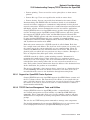
23.3.1 Support for OpenVMS Cluster Systems
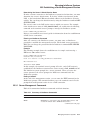
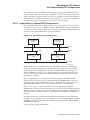
Compaq TCP/IP Services for OpenVMS supports OpenVMS Cluster systems and
the use of cluster aliases. The network sees the cluster as one system with one
name, called the internet alias. A remote host can use the cluster alias to address
the cluster as one host or use the host name of a cluster member to address a
cluster member individually.
23.3.2 TCP/IP Services Management Tools and Utilities
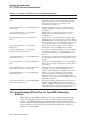
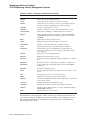
Compaq TCP/IP Services for OpenVMS provides a comprehensive, easy-touse network management tool that includes over 100 OpenVMS DCL-style
commands. These commands allow you to locally configure, monitor, and tune
TCP/IP Services components by issuing management commands at the TCPIP>
prompt.
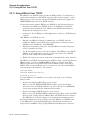
You can also use UNIX management commands to manage some components.
For detailed information about managing TCP/IP Services on your system, refer
to the Compaq TCP/IP Services for OpenVMS Management guide.
Network Considerations 23–5