1
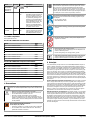
Name
Quantity
B·R·A·H·M·S
PCT sensitive
KRYPTOR QC
CONTROL 2
Quality
recombinant PCT in human serum
3
bar code card
1
bar code stickon labels
Description
ready for
use
20 for each ready for
control
use
see the B·R·A·H·M·S KRYPTOR/
KRYPTOR compact User Manual.
The bar code card contains information related to the control
lot, particularly the target concentrations, the standard deviations obtained and the concentration acceptance ranges. This
information is visible on the
B·R·A·H·M·S KRYPTOR/KRYPTOR compact monitor screen in
the quality control section.
Raw materials of human origin contained in the reagents have
been tested with approved kits and found negative for the antiHIV 1, anti-HIV 2, anti-HCV antibodies and the HBs antigen.
However as it is impossible to strictly guarantee that such products will not transmit hepatitis, the HIV virus, or any other viral
infection, all raw materials of human origin including the samples
to be assayed must be treated as potentially infectious.
The generally acknowledged safety precautions and laboratory
techniques must be observed when handling reagents and patient samples.
– Do not pipet by mouth.
– Wash hands after work.
– Wear protective clothing, protective gloves and safety glasses
at work.
The bar code stick-on labels are
used for identifying the controls
when assayed on B·R·A·H·M·S
KRYPTOR/KRYPTOR compact.
3.3 Other requisites
– Do not eat, drink or smoke in areas, where samples or kitreagents are handled.
Not supplied with the kit.
B·R·A·H·M·S KRYPTOR Consumables
Name
B·R·A·H·M·S KRYPTOR BUFFER
89970
B·R·A·H·M·S KRYPTOR SOLUTION 1
89971
B·R·A·H·M·S KRYPTOR SOLUTION 2
89972
B·R·A·H·M·S KRYPTOR SOLUTION 3
89973
B·R·A·H·M·S KRYPTOR SOLUTION 4
89974
B·R·A·H·M·S KRYPTOR DILCUP
89975
B·R·A·H·M·S KRYPTOR REACT
89976
B·R·A·H·M·S KRYPTOR compact Consumables
Name
B·R·A·H·M·S KRYPTOR BUFFER
89970
B·R·A·H·M·S KRYPTOR compact SOLUTION 1
89981
B·R·A·H·M·S KRYPTOR compact SOLUTION 2
89982
B·R·A·H·M·S KRYPTOR compact SOLUTION 3
89983
B·R·A·H·M·S KRYPTOR compact SOLUTION 4
89984
B·R·A·H·M·S KRYPTOR compact DILCUP
89985
B·R·A·H·M·S KRYPTOR compact REACT
89986
4 Precautions
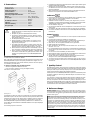
Respect the user's informations given in the User Manual of the
B·R·A·H·M·S KRYPTOR/KRYPTOR compact and in this document.
–
–
–
–
–
Observe the expiry dates specified on the label.
Reagents from different reagent kits should not be mixed.
Do not dissociate the elements of an unit.
Avoid any microbic contamination of the reagents.
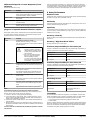
The results, obtained from this assay should always be assessed in combination with the clinical examination, patients
medical history, and other findings before momentous actions
will be prefaced.
– Remove pollutes with absorbing paper.
– All the material used for cleaning up must be disposed of as
infectious laboratory waste.
– Prevent from getting into sewage, water, ground.
– Used reagent plates and reagent kits dispose of as potential
infectious laboratory waste according to local regulations
– Empty containers should be returned to local recyclers.
5 Principle
The measurement principle of B·R·A·H·M·S KRYPTOR/KRYPTOR compact is
based on TRACE Technology (Time-Resolved Amplified Cryptate Emission),
which measures the signal that is emitted from an immunocomplex with time
delay. The basis of the TRACE Technology is non-radiative energy transfer
from a donor (a cage-like structure with an europium ion in the center [cryptate]) to an acceptor, which is part of a chemically modified, light-collecting
algal protein (XL 665). The proximity of donor (cryptate) and acceptor (XL 665)
when they are part of an immunocomplex and the spectral overlap between
donor emission and acceptor absorption spectra on the one hand, intensify the
fluorescent signal of the cryptate and on the other hand they extend the life
span of the acceptor signal, permitting the measurement of temporally delayed
fluorescence.
Precise measuring of analyte concentration: When the sample is excited
with a nitrogen laser at 337 nm, the donor (cryptate) emits a long-life fluorescent signal in the milli-second range at 620 nm, while the acceptor (XL 665)
generates a short-life signal in the nanosecond-range at 665 nm. When the
two components are bound in an immunocomplex, both the signal amplification and the prolongation of the life span of the acceptor signal occur at
665 nm, so that it can be measured over µ-seconds. This long-life signal is
proportional to the concentration of the analyte to be measured.
Reliable prevention of interference: Non-specific signals, e.g. the signals
of the short-life and unbound acceptor XL 665 and the medium-specific interference signals conditional upon the natural fluorescence of the sample, are
eliminated by temporal delay of the fluorescence measurement. The signal
generated by the cryptate at 620 nm serves as an internal reference and is
measured simultaneously with the long-life acceptor signal at 665 nm which
is the specific signal. Interfering influences, e.g. from turbid sera, are automatically corrected by means of the internally calculated ratio of the intensities
at these wavelengths.
Kit contains Potassium Fluoride KF:
Xn R 20/21/22, S 22-24
– Harmful by inhalation, in contact with skin and if swallowed.
– Do not breathe dust. Avoid contact with skin. Avoid every
splash and formation of aerosols.
B·R·A·H·M·S Aktiengesellschaft
B·R·A·H·M·S PCT sensitive KRYPTOR
Instruction for Use (Version R10en)
D 13988
Page 2 of 6