1
Automation Notebook • Fall 2015, Issue Thirty-three
NEXT STEPS
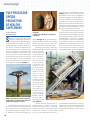
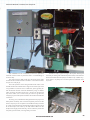
IMAGE 4: Andrew “Mike” Erdman and his students help residents of villages in Africa
increase production of Baobab fruit powder.
Excluding the earlier prototypes which expense, the increased production volume
were not as functional, the students have and purity helps the villagers enormously.
produced about fourteen machines which are (Image 5) Now they can focus on the other
now operating in various African countries. less strenuous, but still labor intensive, parts
Mike estimates that the machines can process of the operation including: the gathering of
a kilo of powder in under three minutes. the fruit, opening the fruit to remove the pulp,
(Image 4) That’s less than 5-10% of the time bagging the refined powder, and shipping to
required by the manual process, and because local or export markets.
the mechanical processor only contacts the
pulp with stainless steel components the
process is much cleaner, and the resulting
powder is much more pure than is produced
by the manual method.
While Mike admits that the machine
is not inexpensive (especially by African
standards), the roughly $1,400 USD cost is
largely due to the requirement for the many
stainless steel components. Even with this
The Penn State student team
is also working on a design for a
Baobab seed oil press which should
be a valuable adjunct to the pulp/
powder machine. Baobab seed oil
is used in cosmetics, lubrication and
cooking, and is quite valuable both
for local use and as an export for
the local villages. (Image 6)
This machine is based on an
AutomationDirect IronHorse AC
motor, coupled to a 60:1 IronHorse
worm-type gearbox. Early designs
used a ½ HP motor, but even with
the 60:1 reduction in speed, and a
1:60 increase in torque, the seeds
are so hard that the motor stalled!
Early testing with an 8-ton
hydraulic ram had already proven
that the seeds could be squeezed
of their oil, and the students are
now reworking the machine to use
a motor with double or even triple
the power of the original motor. This
combination should generate the
tremendous force required to extract
the valuable oil from the seeds of
the Baobab.
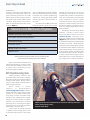
IMAGE 6
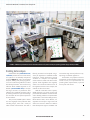
IMAGE 5: Penn State Students have 14 machines
operating in various parts of Africa.
www.automationnotebook.com
21