1
CE 474
8/31/06
STEP 1: Introduction to HILS
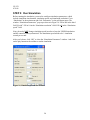
In the last lab, you practiced running the simulation of an intersection in VISSIM. All the
controller parameters (such as minimum green time, maximum green time, and passage
time) and phase sequence are defined in the VISSIM NEMA controller editor, which is
an emulated controller in VISSIM. This emulated controller is not the same as a real
controller unit. The real-time hardware-In-The-Loop Simulation (HILS) was developed
to provide opportunities to fully test the functionality of real controller units using
simulation networks. VISSIM is one simulation software that supports HILS.
Note: You need to define all controller parameters such phase timing and detector options
in a real controller unit. You need to define the traffic simulation network in VISSIM
such as geometry , traffic volumes and turning movements, signal heads, and detectors.
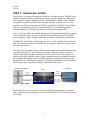
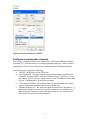
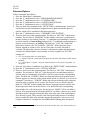
VISSIM HILS includes the controller interface device (CID), an actual traffic controller
unit, and a simulation network in VISSIM run on a computer. These three devices are set
up as shown in Figure 2.
The CID acts as an interface between the computer running the simulation network and a
real traffic controller unit. It relays detector actuations from the computer to the real
controller unit and relays phase status from the real controller unit to the computer. It
allows actual traffic controller units to replace emulated controllers in simulation models
by exchanging information between simulation model and actual traffic controller unit
through two-way communication channels. A VISSIM simulation network with multiple
intersections can be connected to multiple CIDs and controller units.
Computer running VISSIM
simulation network
Controller unit
CID
Detector
actuations
Detector
actuations
Phase status
Phase status
Figure 2, HILS setup.
HILS needs to be run in real-time to coordinate VISSIM simulation and real controller
units, which means the simulation speed in VISSIM should be set as 1 simulation second
per second.
2