1
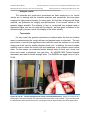
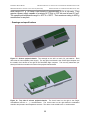
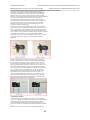
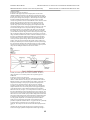
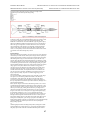
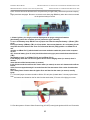
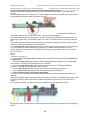
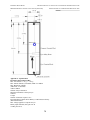
PRELIMINARY DESIGN REVIEW MEASURING RADIATION AS A FUNCTION OF ALTITUDE USING A HYBRID ROCKET PLATFORM NASA 2010 UNIVERSITY STUDENT LAUNCH INITIATIVE (2010 USLI) HARDING UNIVERSITY FLYING BISON 2010 USLI ROCKET TEAM The science payload will be contained on three printed circuit boards as shown in the figures below. In addition a g-switch will be used to turn on the system at launch thereby saving power for use during the flight only. The system is powered by 2 nine volt batteries. Science payload consists of Flight computer number 1 Flight computer number 2 Embedded micromputer system Radiation counter Temperature sensor Pressure sensor X-, Y-, Z- accelerometers Battery power supply Radiation Sub system -- the Geiger counter kit used is GCK-05 from Images SI, Inc. The Geiger-Mueller Tube is neon plus halogen filled with a 0.38 in effective diameter mica end window of 1.5 to 2.0 mg per cm 2. It will detect the following radiation: Alpha particles above 3.0 MeV Beta particles above 50 KeV Gamma particles above 7 KeV. Temperature Subsystem -- the temperature transducer will be measured with a National Semiconductor LM50CIM3 transducer. This temperature transducer reads directly in Celcius degrees (10 mV/⁰C). The nonlinearity is less than 0.8⁰C over its temperature range of -40⁰C to +125⁰C. The accuracy at 25⁰C is ±2% of reading. It operates with any single polarity power supply delivering between 4.5 and 10 V. Its current drain is less than 130 mA. Pressure Subsystem -- the pressure transducer is a ASDX015A24R Honeywell device with a pressure measuring range of 0 to 15 psi and a burst pressure of 30 psi. It is powered by voltages in the range of 4.75 Vdc to 5.25 Vdc and has a current consumption of 6 mA. It will operate in the temperature range of -20⁰C to 105⁰C. It is survive 10 gram vibrations from 20 Hz to 2000 Hz and can survive a 100 g shock for 11 ms. Its lifetime is 1 million cycles minimum. Acceleration Subsystem -- There is one 1-axis low-range accelerometer, ADXL103CE, and one 2-axis low range accelerometer, ADXL203CE from Analog Devices. There is one 1-axis high-range accelerometer, AD22279-A-R2, and one 2axis high range accelerometer, AD22284-A-R2. All of these devices have an output full19