1
Note from the Builder
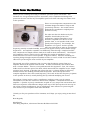
Thank you for choosing Tone King’s “Ironman” precision power attenuator. The
Ironman is a new generation of power attenuator, with a sophisticated design that
preserves the tone and feel of your amplifier quite well while reducing the volume level
at the speakers.
There are two important components to the
Ironman design that make it unique and
particularly effective - the tuned reactive
load and the transformer coupled power
division circuitry.
The idea was that the load seen by the
amplifier should always have the
appropriate complex impedance curve
so that it responds as it does to a real
speaker load. A real speaker load varies
greatly with frequency. For example, the
impedance of a typical "8 ohm" speaker
may rise to 60 ohms or more at its resonant
frequency (usually around 60-80Hz), and then rise again to many tens of ohms at high
frequencies. An amplifier responds a lot differently when driving a complex load like
this, compared to a simple resistive load (as is used in most attenuators). I developed
the Ironman's reactive load circuit by matching the results of impedance curve
measurements I ran on an actual speaker in typical cabinet, and then tweaking the
resulting design thought empirical methods in order to create a load circuit that is most
effective at preserving the tone and feel of your amplifier.
The second part of the equation is the circuitry that divides the power from your
amplifier between the speaker and the load. In other attenuators, this is often done
with a resistor ladder. There are two problems with this approach - first, the resistor
ladder itself can become part of the load, which means that the amplifier sees a simple
resistive load. Second, in dividing the power this way, a voltage divider is effectively
formed between the dividing network and the speaker. Since the speaker has a
complex impedance that varies with frequency, the result is that the frequency response
at the speaker is altered, usually dulling the top end and muddying the sound.
The scheme I chose involves 100% transformer coupling, using a set of custom
transformers, so that the connection between the amplifier -> load and between the
amplifier -> speaker is purely transformer coupled at every step of the attenuation dial.
This is an expensive and elaborate design (each step of the dial requires its own tap on
one of the custom transformers), but is significantly more effective at preserving the
tone and feel of your amplifier than other methods.
I thank you for your purchase of the Ironman, and I hope you enjoy using as much as I
do.
Best Regards,
Mark Bartel
Tone King Amplifiers, a division of Premier Builders Guild LLC
1