1
Practical Variable Speed Drives and Power Electronics
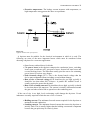
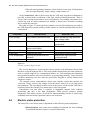
• Maximum speed, usually set to 50 Hz, but often set to a higher speed to suit
the application. Reference should be made to Chapter 6 to ensure that the
maximum speed does not take the drive beyond the loadability limit.
• Minimum speed, usually 0 Hz for a pump or fan drive, but often set at a
higher speed to suit constant torque applications. Reference should be made to
Chapter 6 to ensure that the minimum speed does not take the drive below the
loadability limit.
• Rated current of the motor, this depends on the size of the motor relative to
the rating of the converter. The current rating of the converter should always
be equal to or higher than the motor rating. For adequate protection of the
motor, the correct current rating should be chosen.
• Current limit, determines the starting torque of the motor. If a high
breakaway torque is expected, a setting of up to 150% will provide the highest
starting torque.
• Acceleration time, determines the ramp-up time from zero to maximum
speed. This should be chosen in relation to the inertia of the mechanical load
and the type of application. For example, in a pumping application, the
acceleration time should be slow enough to prevent water hammer in the
pipes.
• Deceleration time, determines the ramp-down time from maximum speed to
zero. This setting is only applicable if the ‘ramp to stop’ option is selected.
Other alternatives are usually ‘coast to stop’ and ‘DC braking’. On high
inertia loads, this should not be set too short. If the deceleration time is below
the natural rundown time of the load, the DC voltage will rise to a high level
and could result in unexpected tripping on ‘over-voltage’. The deceleration
time can only be shorter than the natural rundown time if a dynamic braking
resistor has been fitted.
• Starting torque boost, can be selected if the load exhibits a high breakaway
torque. This feature should be used cautiously to prevent over-fluxing of the
motor at low speeds. Too high a setting can result in motor over-heating. Only
sufficient torque boost should be selected to ensure that the VSD exceeds the
breakaway torque of the load during starting.
There are also many other settings commonly required on modern digital VSDs. The
above are the most important and must be checked before starting. The remaining
parameters usually have a ‘default’ setting which will probably be adequate for most
applications. However, these should be checked and adjusted for optimum operation.