1
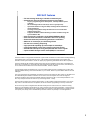
S08 SLIC features
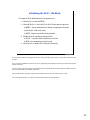
• Full LIN message buffering of identifier and 8 data bytes
• Automatic bit rate and LIN message frame synchronization:
•
•
•
•
•
•
•
•
•
•
•
•
•
•
No prior programming of bit rate required, 1–20 kbps LIN bus speed
operation
All LIN messages will be received (no loss in synch process)
Input clock tolerance as high as ±50%, allowing internal oscillator to
remain untrimmed
Incoming break symbols always allowed to be 10 or more bit times
without message loss
Supports automatic software trimming of internal oscillator using LIN
synchronization data
Auto processing & verification of LIN SYNCH BREAK & BYTE
Auto checksum calculation & verification with error reporting
Enhanced checksum (includes ID) generation & verification
Maximum of 2 interrupts per LIN message frame
Full LIN error checking & reporting
High-speed LIN capability up to 83.33 kbps to 120.00 kbps
Configurable digital receive filter removes noise from the bus
Streamlined interrupt servicing with patented state vector register
Optional UART-like byte transfer mode (BTM) for non-LIN use
TM
Freescale™ and the Freescale logo are trademarks of Freescale Semiconductor, Inc. All other product
or service names are the property of their respective owners. © Freescale Semiconductor, Inc. 2005.
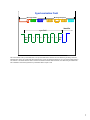
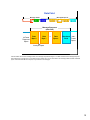
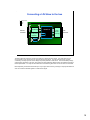
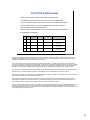
The SLIC module is a very powerful module with a great number of features. It contains full LIN message buffering
of the identifier and up to 8 data bytes at a time. It also handles LIN message-frame synchronization and
automatic bit-rate synchronization. It does not require pre-programming of the Baud rate for LIN-bus operation.
The SLIC handles all LIN messages including those during the synchronization process with no messages lost
due to the synchronization. It can handle input clock tolerances as great as plus or minus 50%, which allows you
to run off an internal oscillator and not even trim that oscillator, if that is so desired.
Incoming break symbols are allowed to be 10 or more bit times without the risk of message loss. The SLIC also
supports software trimming of the internal oscillator, if you so desire, based on synchronization data from the LIN
messages.
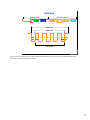
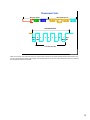
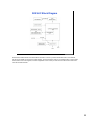
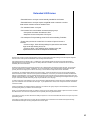
The synch break & byte are automatically processed by the SLIC and verified as valid. Checks on calculations are
done automatically and verified and if there's an error found, those are reported. The SLIC also supports
enhanced checksums which include the identifier that were introduced in LIN 1.3 and newer specifications. The
SLIC only interrupts the CPU two times for any LIN message frame -- always.
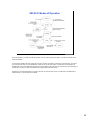
The SLIC also has full LIN error-checking and reporting. It's also capable of high-speed operation up to 120.00
kbps, which is six times faster than LIN specifies, but can be useful for programming in a factory environment.
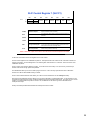
On the receive pin, there's a digital receive filter that actually removes noise from the bus, rather than simply
flagging it for the software to decide what to do, which provides more robust noise suppression. Interrupt serviceroutine handling is streamlined through a patented state vector register to make interrupt service routines operate
more quickly. And, finally, there is a UART-like byte transfer mode for use primarily in non-LIN applications.
2