1
General remarks for blood samples
Test Evaluation
•
•
•
•
The results of the test can be read within 5-10 minutes after starting the test.
If possible, separate serum or plasma from whole blood as soon as possible to avoid haemolysis
Heparin or EDTA blood can be used for the plasma extraction
Use only clear, non-haemolyzed specimens
Use of whole blood may decrease the sensitivity of the test result
Testing should be performed immediately after specimen collection. Do not keep
the specimens at room temperature for a prolonged period. Serum and plasma
specimens can be stored at 2-8° C for up to 3 days. For long-term storage,
specimens should be kept below -20°C. Do not freeze whole blood samples!
Sample need to have room temperature prior to testing. Frozen samples must be
completely thawed and mixed well prior to testing. Samples should not be frozen
and thawed repeatedly. If samples are to be shipped, they should be packed in
compliance with local transportation regulations for biologic agents.
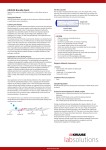
Positive Result
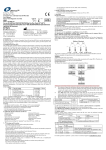
The test is positive when the control line (C) and the test line (T) are
visible in the reaction field as shown in the left reaction field. FeLV was
detected in this case.
Even a faint test line indicates a positive test result.
The test is negative when only the control line (C) is visible. No test lines are visible. Neither FeLV nor FIV were detected.
Negative Result
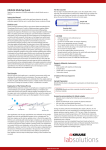
Test Procedure for Serum and Plasma
1.
Take a blood sample from the cat to prepare the serum or plasma sample. Open the pouch; remove the pipette and pick up the sample material with the pipette.
Place one drop of serum or plasma from the pipette into each sample well. Wait until the sample fluid is completely absorbed.
2. Open the buffer and add 2 drops of the buffer into each sample well.
If the liquid is not running well up the strip after 2 minutes, add an
additional drop of buffer into the respective sample well.
If no control line is visible after the test is conducted, the test is invalid. In this case,
the test may not have been correctly carried out, the test may have passed the
expiry date or the test was exposed for too long to ambient air outside the sealed
pouch. If this occurs, a new test must be conducted.
ATTENTION: The results must be read within 10 minutes of starting the
test. The test and the result are considered as invalid after that period.
Remarks: The test results should always be judged in connection with the medical
history and clinical context. All test results obtained with whole blood samples,
which do not correlate with the clinical picture, should be repeated with a plasma
or serum sample. All doubtful test results should be repeated after approx. 2 weeks.
3. Read the results within 5-10 minutes of starting the test.
1.
Invalid Result
2.
Storage
KRUUSE FIV/FeLV Quick must be stored at room temperature (2°C to 30°C).
Disposal
A safe disposal is recommended. Sample material and test cassettes should be
collected in a sealable plastic bag.
Test Procedure for Whole Blood
1.
Take a blood sample from the cat. Open the pouch, remove the pipette, pick up the sample material with the pipette and place 2 drops of the whole blood into the sample tube.
Open the buffer and add 6 drops of the buffer into the sample tube.
2.
Close the sample tube and shake it gently. Open the sample tube again and pick up the sample material with the pipette. Slowly place 2 drops of the sample material with the pipette into each sample well (add the first drop to the
respective sample well, wait a couple seconds until the drop is absorbed, then add the second drop).
If the liquid is not running well up the strip after 2 minutes, add a drop of the
buffer fluid into the respective sample well.
3. Read the results within 5-10 minutes of starting the test.
1.
2.
Test Performance Characteristics
Sensitivity and Specificity in serum sample
Specificity-Sensitivity study 2010
KRUUSE FIV/FeLV Quick
Enzyme-linked Immunosorbent Assay
Sensitivity
Specificity
FIV
93 %
96 %
FeLV
92 %
96 %
References
1. Anderson, R C., and R. M. May (ed.). 1982. Population biology of infectious diseases. Springer-Verlag KG, Berlin.
2. Hosie, M. J., and 0. Jarrett. 1990. Serological responses of cats to feline
immunode ficiency virus. AIDS 4:215-220.
3. Kaaden O-R, Gedek B, Mahnel H, Mayr A: „Spezielle Virologie“ in: Medizinische Mikrobiologie, Infektions- und Seuchenlehre. Stuttgart 1993
4. Pedersen, N. C., E. W. Ho, M. L. Brown, and J. K. Yamamoto. 1987. Isolation of
a T-lymphotropic virus from domestic cats with an immunodeficiency-like syndrome. Science 235:790-793.
5. Yamamoto, J. K., H. Hansen, E. W. Ho, T. Y. Morishita, T. Okuda, T. R. Saura, R. M. Nakamura, and N. C. Pedersen.1989. Epidemiologic and clinical aspects of FIV
infection in cats from the continental U.S. and Canada and possible mode of transmission. J. Am. Vet. Med. Assoc. 194:213-220.
Symbols Used
Only for one use
labsolutions
∑
Content
+30°C
Storage temperature
+4°C
Lot number
www.kruuse.com
Read user instruction carefully
Expiry date