1
. . . . . . . . . . . . . . Technical Support
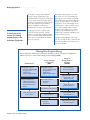
Prioritizing Your Projects
U
se the ENERGY STAR five-stage
concept to help organize a
strategy for putting potential
upgrades on a timeline. Each
stage of the program builds upon
the accomplishments of the previous
stages to maximize potential energy
savings, minimize investment requirements, and improve comfort and
profitability for your business.
Stage One: Lighting
Many retailers and offices spend half
of their electric bills on lighting, so it
makes sense to address lighting first
to reduce your energy costs. Efficient
lighting pays for itself quickly. Lighting
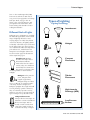
upgrades such as installation of
compact fluorescent lamps and lightemitting diode (LED) exit signs are
relatively simple to implement and
can reliably deliver the expected cost
savings. Upgrade your lighting before
changing your heating or cooling
systems because increasing your
lighting efficiency lowers your airconditioning requirements. In the
winter, heating your building with
your lights is expensive because new
lights operate much cooler than
old lights. Use your heating system
instead. Five years of ENERGY STAR
experience show that successful
lighting upgrades provide Partners
with dramatic savings and positive
reinforcement for pursuing further
projects. Lighting upgrades often
improve lighting quality, which can
boost worker productivity and enhance the appearance of your merchandise. For all of these reasons, we
recommend you start with lighting as
your first upgrade area.
Stage Two: Building
Tune-Up
Bring your building back to its original
design performance by addressing
operations, maintenance, and small
repairs. You can do many tune-up
activities yourself, such as cleaning
equipment and replacing filters. Other
tune-up measures, such as adjusting
your furnace or repairing malfunctioning controls, will require the services
of contractors. Stage Two upgrades
improve occupant comfort and indoor
air quality, and the upgrades are nocost or low-cost strategies that lay the
foundation for further savings in later
stages.
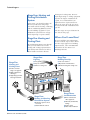
Stage Three: Load
Reduction
Load reduction strategies reduce the
amount of heating, cooling, or electricity use through low-cost measures that
are easy to implement. Reducing the
amount of heated or cooled air that
escapes from your building through
cracks in windows or ducts will reduce
your heating and cooling costs.
Window films, shades, and awnings
will reduce heat gain in the summer.
Or you can take advantage of landscaping measures such as adding trees
and vines to block direct sunlight.
Each stage of the program
builds upon the previous
stages to maximize
potential energy savings,
minimize investment
requirements, and improve
comfort and profitability.
You can take simple steps to ensure
that lights and office equipment are
not left on by accident. And select
ENERGY STAR-labeled new equipment
to guarantee the best future savings.
ENERGY STAR® Small Business Guide 31