1
4.
Errors
4.1.
Sources of error in data (Hellerstein, 2008)
Data entry errors. It remains common in many settings for data entry to be
done by humans, by keying in data from written or printed sources, e.g. after
fieldwork. In these settings, data is often corrupted at entry time by
typographic errors or misunderstanding of the data source (see 2.3).
Measurement errors. In the measurement of physical properties, as altitude
or spatial data, the increasing proliferation of sensor technology has led to
exact measurements. Nevertheless data errors are still quite common:
selection and placement of sensors often affects data quality, and by
transferring data to the database errors may occur. Converting coordinates
from one system to another may cause errors and converting
longitude/latitude data from degrees to decimal may often result in a wrong
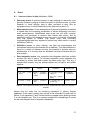
calculation (Table 2).
Distillation errors. In many settings, raw data are preprocessed and
summarized before they are entered into a database. This data distillation is
done for a variety of reasons and has the potential to produce errors in
distilled data, or in the way that the distillation technique interacts with the
final analysis.
Data integration errors. Any procedure that integrates data from multiple
sources can lead to errors. To minimize integration errors standards are
necessary to ensure that fields contain the same entity type. That e.g. a
species field contains only the species epithet and not genus and epithet
together.
latitude / longitude
formula
calculation
decimal result
44° 16’ 12,01’’ - 7° 23’ degrees + (minutes / 44 + (16 / 60) + (12,01 / 44,27000278°
7,39680556°
3600) / 7
60) + (seconds /
48,50’’
3600)
+ (23 / 60) + (48,50 /
3600)
44° 15,368’ - 7° 22,86’
degrees + (minutes / 44 + (15,368 / 60) / 7 + 44,2728° - 7,381°
60)
(22,86 / 60)
Table 2. Two examples to show how to convert longitude/latitude data from degrees to
decimal.
Names form the major key for accessing information in primary species
databases. If the name is wrong, then access to the information by users will be
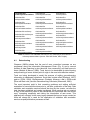
difficult, if not impossible. Table 3 shows what may happen when entering names
in a non-standard way. This is an extreme example but misspellings of names
are the most frequent error in taxonomic databases.
57