1
1
1. Overview
1.1. Introduction
The basic goal is to implement activities structures [Riddle 91] on top of MARVEL [Kaiser 88, Kaiser 90],
as one approach to supporting a high-level software process control layer for MARVEL. But what does it
mean to ‘‘implement activities structures’’ and what does ‘‘on top of MARVEL’’ mean? There are many
approaches, for example, that might take advantage of MARVEL’s object-oriented data modeling but
effectively ignore the rule-based process modeling. We are primarily interested in approaches that exploit
the rule-based process modeling and enaction. Since our rules are treated as multi-methods, this implies
at least some use of the object-oriented data modeling as well.
Our high-level approach is then to translate activities structures into rules and enact activities structures
using forward and backward chaining. Then, what are ‘‘activities structures’’, what does it mean to
‘‘translate’’, and what does it mean to ‘‘enact’’?
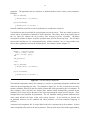
We represent activities structures in a language consisting of the five structuring primitives of constrained
expressions and the send/receive synchronization primitives. Different portions of a software process are
defined in this language, called the Activity Structures Language (ASL), augmented by additional
constructs taken from the existing MARVEL Strategy Language (MSL).
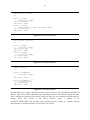
A process is translated into MSL classes, rules and envelopes. In order to execute a process, there must be
some instantiation whereby activities are mapped to the corresponding data on which they will be carried
out and/or the user(s) who will be involved in carrying them out. This is done by creating first class
objects that represent the activity structures, assigning userids to attributes of these objects, and linking
data objects to attributes of these objects. A process is enacted by forward and backward chaining over
the generated rules, where the status attributes manipulated by the rules are represented as attributes of
activity structure objects. We thus map the three lifetime steps of (1) definition, (2) activation and (3)
invocation into (1) definition of activities structures in ASL and translation into MSL, (2) instantiation and
(3) enaction.
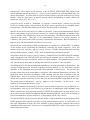
An important issue of scale arose during this investigation. MSL is intended to define a full software
development process undertaken by teams of personnel, although in practice only the coding and testing
portions of the lifecycle have been defined to date in C/Marvel, our main example. ASL strategies are
similarly intended to define full processes, but individual activity structures define only a tiny portion of a
process. Many activity structures instantiated by multiple users (or by the same user at different times or
simultaneously in different windows) are required to perform a practical subset of a large scale process.
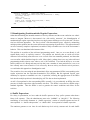
1.2. Activity Structures
Activity structures are defined by an environment administrator rather than an end-user of the
environment (although it is not necessarily the case that these are always different people). The activity
structures are completely specified in advance of generating an environment in which the corresponding
process is enacted. This precludes the possibility of an administrator or user defining additional activity
structures or modifying the current ones, after the environment has been in real use, and then evolving the
environment on or off-line. (A small ‘‘test’’ objectbase is used in debugging the specifications, which are
typically modified significantly during debugging.) We are studying the feasibility of off-line evolution