1
Overview
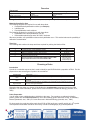
Component
Item
Mega Northern mRNA Array
GAPDH control probe
Signal locator
Amount
1 array
100 ng (10 µl)
1
Storage
Room temperature, away from
light and moisture
-20ºC
Room Temperature
Storage Conditions: Store arrays at room temperature, away from light. Store control probe at -20°C.
Materials Supplied by User
The following reagents are required for use with these blots:
!" Prehybridization/hybridization solution (see Recipes)
!" Labeled probe
!" Post-hybridization wash solutions
The following equipment is required for use with these blots:
!" Hybridization tube and hybridization oven or
!" Heat-sealable plastic bags and a 30ºC-80ºC incubator
Whenever possible, use hybridization tubes and a hybridization oven. This method reduces the possibility of
radioactive contamination.
Time Line
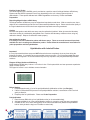
The following table outlines the steps and times required for probing the Northern Blot.
Step
1
2
3
4
5
Action
Incubate the array in prehybridization solution.
Hybridize the array with radioactive or non-radioactive labeled probe.
Remove hybridization solution. Wash the array.
Wash the array 2 more times.
Expose the array to X-ray film
A longer exposure is recommended for Mega Northern mRNA
Array compared with the conventional Northern Blot
Time
3h
16-24 h
30-45 min.
2 x 20 min.
Minutes for nonradioactive probe,
hours to days for
radioactive probe
Choosing a Probe
Introduction
A probe is a nucleotide sequence that is used to identify a specific RNA within a population of RNA. For this
purpose there are several types of probe to be considered.
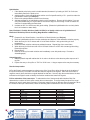
Type of Probe
Used when…………..
Analyzing RNA population for the presence of a gene similar to the gene of interest.
DNA
RNA
Oligonucleotide
Analyzing RNA population for the presence of a particular gene using the genetic
transcript
Searching RNA population for the presence of a particular sequence that may be present
in one or more gene transcripts
Remember that the probe you choose will be binding the complementary sequence found in the RNA
population. For more information, please refer to Current Protocols in Molecular Biology (Ausubel, et al.,
1994)
Probe Preparation
You will need to have a labeled probe to hybridize to the array. For procedure on radioactive labeling
probes, please refer to Probe Preparation or one of the following guides: Molecular cloning: A Laboratory
Manual (Sambrook, et al., 2001) or Current Protocols in Molecular Biology (Ausubel, et al., 1994).
For best results, the probe should be made from 25-50 ng DNA and have a specific activity of ! 108 cpm/ml.
Unincorporated nucleotides should be removed by column chromatography or gel electrophoresis.
2