1
PMAC User Manual
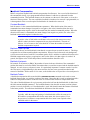
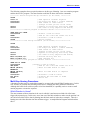
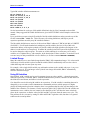
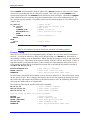
RET
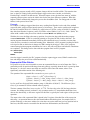
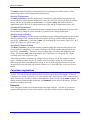
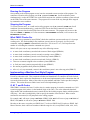
N09000 M7=0
RET
; Clear Mach. Out. 7: Coolant Off
DWELL statements could be added before and/or after the setting of the outputs if it is desired to provide
some time for the change to occur.
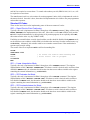
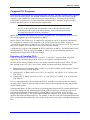
M12 — Chip Conveyor On
M13 — Chip Conveyor Off
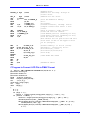
The implementation of these codes will be machine dependent, but typically very simple. For instance, if
the conveyor on/off line were wired into Machine Output 2, these routines could simply be:
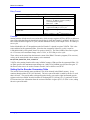
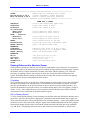
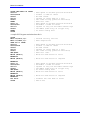
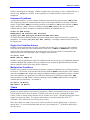
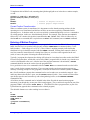
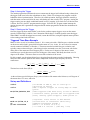
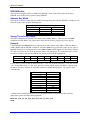
N12000 M2=1
RET
N13000 M2=0
RET
; Set Mach. Out. 2: Conveyor On
; Clear Mach. Out. 2: Conveyor Off
M30 — End of Program with Rewind
See M02 description. M30 will be essentially equivalent to M02 in most systems but will return to the
beginning of the program.
Default Conditions
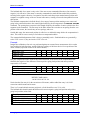
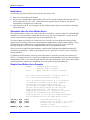
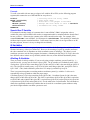
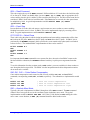
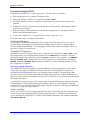
Typically, a machine running G-code style programs requires many default values and modes beyond
what PMAC sets automatically during its power-up/reset cycle. To set these defaults, it is best to use the
PLC 1 program, which will be the first thing executed after the automatic power-up/reset cycle
(effectively extending what is done in this cycle). The last line in this program should be DISABLE PLC
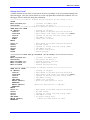
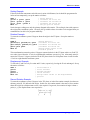
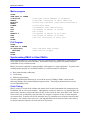
1, which prevents repeated execution of the program. A simple file for such a program could be:
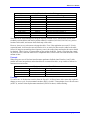
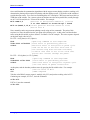
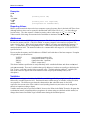
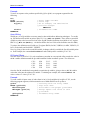
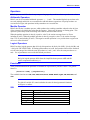
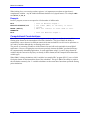
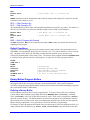
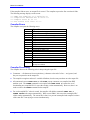
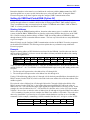
CLOSE
OPEN PLC 1
CLEAR
M55=0
P92=3000
P95=1000
M70=0
DISABLE PLC 1
CLOSE
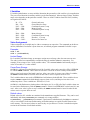
;
;
;
;
;
Spindle Off
Maximum spindle RPM
Max spindle accel in RPM/sec
English measurements
So this is only executed once
Rotary Motion Program Buffers
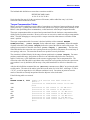
The rotary motion program buffers allow for the downloading of program lines during the execution of
the program and for the overwriting of already executed program lines. This permits continuous
execution of programs larger than the PMAC memory space, and also real-time downloading of program
lines (equivalent to SMCC's MDI mode).
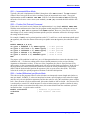
Defining a Rotary Buffer
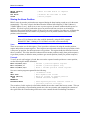
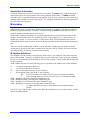
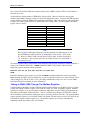
Each coordinate system can have a rotary program buffer. To create a rotary buffer for a coordinate
system, address that coordinate system (&n) and send the DEFINE ROT {constant} command,
where {constant} is the size of the buffer in memory words. Each value in a program (e.g. X1250)
takes one word of memory. The buffer should be sized to allow enough room for the distance ahead of
the execution point you wish to load. Since most applications utilizing rotary buffers will not strain the
PMAC memory requirements, it is a good idea to oversize the buffer by a good margin.
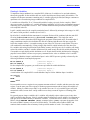
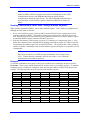
For instance, to load 100 program lines ahead of the execution point in a four-axis application where it is
using constant values for position (e.g. X1000 Y1200 Z1400 A1600), there should be at least 400
Writing Programs for PMAC
14-51