1
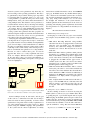
electronic systems can be guaranteed only when they are used according to their operating specifications. This has to be guaranteed by the procedures and the people responsible for executing them. For example, there is no way for an e-voting machine to prohibit the same person from casting multiple ballots, if the poll workers enable the machine for voting multiple times. This behavior can be prevented (or revealed after the election) only by enforcing and verifying the procedures that the poll workers are supposed to follow. In contrast, there are other fundamental properties that the procedures can only partially assure. In this case, the e-voting systems must guarantee that these properties are satisfied. Using the example we just made, the machine must ensure that a voter can cast at most one vote, given that the poll workers follow the prescribed procedures. Analyzing such requirements and their allocation is therefore important in two respects. First, it helps to ensure that the systems meet the necessary reliability and dependability goals. Second it helps to better understand how a different allocation of requirements between systems and procedures could improve the overall security of the election process so that we can build the next generation of e-voting machines. However, in order to achieve these goals, we need an approach that allows us to easily experiment and reason about, for example, different allocations of requirements. At the same time, it has to be precise and exhaustive, so that security and dependability consequences of any specific choice are highlighted. derived from available information sources: the EVEREST report [7], the ES&S election day checklist manual [10], a video1 that shows how the ES&S system works on election day, and other requirements suggested in the literature (e.g., [11], [12]). Using formal analysis tools, we can assess the strengths and weaknesses of the system. Results or feedback gained from the formal analysis can be a basis for specifying and analyzing generic requirements from which the next generation of voting machines can be built (see also Figure 1). III. E LECTRONIC VOTING S YSTEMS A. ES&S Voting System Components For the purposes of this work (see [7] for a more detailed and complete view) the ES&S voting system is composed of: • DRE: Direct Recording Electronic voting machine, called the iVotronic. It is equipped with a touch-screen where the voter casts his/her votes. The information shown by the touch-screen changes in real-time to match the voter’s choices. The iVotronic also stores the audit data. • RTAL: Real-Time Audit Log Printer, which performs the function of a VVPAT (Voter-Verified Paper Audit Trail) for the ES&S system. It produces a paper-based record of the choices selected by the voter. The RTAL is plugged into the DRE and the paper record is viewable by the voter. The voter’s choices are under a transparent cover so that they cannot be modified other than through the normal voting process. • PEB: Personalized Electronic Ballot. This is a device used by the poll worker to load a ballot, initialize the next ballot, and collect tabulated data and audit information. Each time a PEB is inserted, its authenticity is checked by the DRE using a four-digit code (election qualification code, EQC), which is assigned prior to election day. • CFC: Compact Flash Card. This device holds files too large to fit in the PEB and also audit data. The card must be present to open and close the polls. At poll closing, the audit data is automatically dumped into the card. Formal Specication Generic DRE ES&S Checklist Manuals formalizes ES&S Operational Videos EVEREST Report ASTRAL Specication based on formalizes designed using describe nominal behavior of describes non nominal behavior of ES&S Machine Next Generation Voting machine B. Voting Process for a DRE based System Figure 1. Overview of our approach. Labels nominal and non nominal refer to the actual and undesired behaviors of the system, respectively. In short, running an election on election day using the ES&S system is as follows (see [7] for further detail). Prior to opening the polls, a poll worker unpacks and sets up the DRE and plugs in the RTAL printer and power cables. Poll workers must also ensure that a properly programmed CF card is installed before powering on the DRE. A Master PEB is inserted into the terminal to load the ballot and later to open the terminal for voting. The same master PEB must Formal techniques clearly fit both needs, and the goal of this work is to demonstrate how their use can help to ensure fair elections. More specifically, we derive formal specifications along with critical security requirements for one of the currently deployed e-voting systems (i.e., ES&S system) using the ASTRAL language. The specification of the system and the critical requirements are mainly 1 http://www.essvote.com/HTML/voter outreach/ivotronic flash.html 111666555 Authorized licensed use limited to: UNIVERSITA TRENTO. Downloaded on July 09,2010 at 08:25:55 UTC from IEEE Xplore. Restrictions apply.