1
Appendix C – Mass HiPot Examples
CableTest Systems Inc.
Mass HiPot Routine
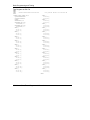
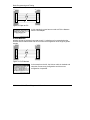
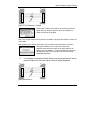
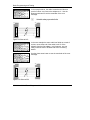
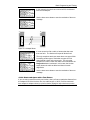
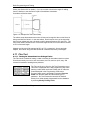
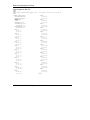
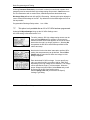
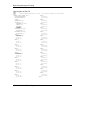
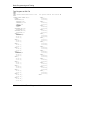
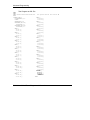
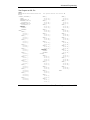
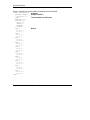
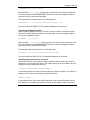
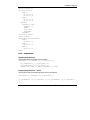
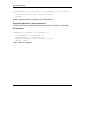
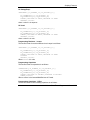
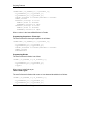
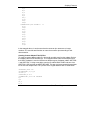
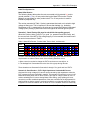
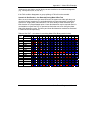
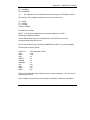
The following binary tables show the nets connected to high potential (+) and to
ground potential (–) for a 16-net product during the Mass HiPot routine. Similar
patterns are generated for other product sizes. The 16-net product is used for
illustrative purposes only.
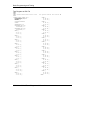
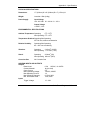
The routine presented in Table 1 (below) guarantees that each net is raised to high
voltage at least once. This is important to ensure that leakage (i.e. Insulation
Resistance or ‘IR’) is measured on all points and to ensure that Dielectric Withstand
Voltage (DWV) testing is performed on all nets against all external ground points.
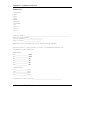
Scenario 1: Good Product (No need to sub-divide into smaller groups)
When the Product Under Test (PUT) is ‘good’ (i.e. passes IR and DWV tests), and
the current limit of the MPT’s high voltage supply is not exceeded, the iterations will
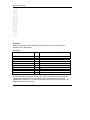
be carried out as shown in Table 1.
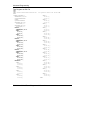
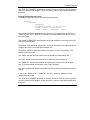
Table 1: Mass HiPot Routine - Product Under Test is ‘Good’, no faults exist.
Test
Phase
1
2
3
4
5
Net Number
1
2
3
+
+
+
+
+
+
+
+
+
+
4
+
+
-
5
+
+
+
6
+
+
-
7
+
+
8
+
-
9
+
+
+
10
+
+
-
11
+
+
12
+
-
13
+
+
14
+
-
15
+
16
+
-
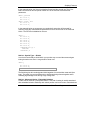
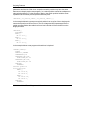
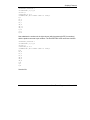
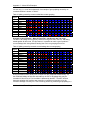
The MPT will automatically divide the nets into smaller groups so that the current
requirements are reduced when either of the following situations occurs:
a. More current is required to charge the PUT than the source can deliver; or
b. The leakage limit is exceeded due to the size of the group during IR tests.
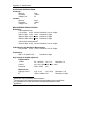
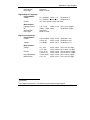
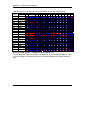
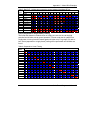
These situations are illustrated in Scenarios 2 through 5 for ‘good’ and ‘bad’ PUT’s.
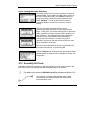
Scenario 2: Good Product – PUT’s High Capacitance Overloads HV Source
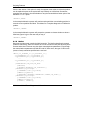
Overload of the high voltage (HV) source can be caused by high capacitance when the
PUT’s grouped nets are connected in parallel. This scenario is most likely to occur in AC
Mass HiPot testing when the AC drive current is too high for a large number of nets. To
avoid overloading the HV source during Mass HiPot testing, group splitting will occur
recursively until the combined capacitance of the nets connected to the high potential is
small enough so that the system’s overload condition is not triggered when high voltage
is applied. An overload condition will not result in a FAIL condition unless it is caused by
Horizon Series Tester: Programmer’s Manual 3