1
The Compliance Corner . . .
Measuring the Rain
How do you determine if your facility is experiencing a qualifying
monitoring event? Do you simply wait until there is water running off
your facility? If it is an early morning event and runoff is occurring
while you arrive at your facility, do you know when runoff began?
There is no specific requirement in the current Industrial General
Permit Order No. 97-03-DWQ (General Permit) for rain
measurement. The General Permit states:
“facility operators shall visually observe storm water discharges from one
storm event per month during the wet season (October 1-May 30). These
visual observations shall occur during the first hour of discharge and at all
discharge locations. Visual observations of stored or contained storm water
shall occur at the time of release.”
The General Permit leaves the determination of the commencement
of a discharge (runoff) in the facility’s hands. We have seen
assumptions made by third party litigators for runoff being achieved
at a facility by simply referencing a regional rain gauge reading. The problem is that the
regional rain gauge could be across the street, or miles away and it
may not be representative of what is happening at your facility. We
have encouraged facilities to, where possible, collect their own rainfall
data by using an on-site rain gauge. The on-site rain gauge is used to
establish whether or not a “qualifying rain event” has occurred. So if
you are unsure of when the rain began or when runoff began at your
facility by utilizing an on-site rain gauge you may end up reducing the
number of sample events by closely tracking your facility’s rainfall. The rain gauge also
provides site-specific data that can be used if an agency or third party environmental group
accuses you of not performing the required sampling. It is hard for them to argue against
good on-site precipitation data. While the on-site rain gauge is not required by the current
General Permit, the most recent draft of the permit renewal requires using an on-site rain
gauge. Whether you are using an on-site rain gauge, a nearby rain gauge, or making your
own determination of runoff, it is important to make sure you accurately log your observation
and maintain them with your facility’s storm water records.
What Kind of Rain Gauge?
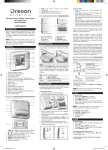
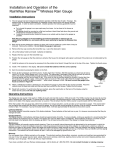
Rain gauges come in all sorts of styles, features, and price ranges. You can buy a plastic cone-shaped
model at the dollar store or pay more than $10,000 for a sophisticated weather station; and find almost
anything in-between. But questions you should consider before making your choice include: 1) Do you have
personnel to empty the gauge or do you need a self-emptying model? 2) Will someone read and record the
data daily or do you need the data stored within the unit for a period of time? 3) Do you have power
available for the weather station? 4) What are the chances of theft or vandalism? 5) Should there be a
back-up gauge? The economics of rain measurement includes not only the device, but also labor to read,
record, and maintain the gauge.
2