1
US 8,l64,467 B2
6
5
Various embodiments envision the use of programmed
usage patterns or conditions, as illustrated in FIGS. 4 and 5.
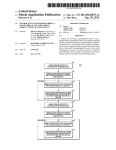
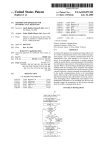
Referring noW to How 440 of FIG. 4, at Block 410 pro
a last key press made by a user of the remote controller,
With the remote controller automatically entering the
poWer saving mode a predetermined period of time after
the last key press made by the user of the remote con
grammed usage patterns associated With use or non-use of the
remote controller by a user are de?ned; again each pro
troller is detected. (as in Block 320)
a user pressing a sequence of keys of the remote controller.
grammed usage pattern has an associated programmed period
the elapsed time betWeen key presses; this may indicate
“channel sur?ng”, for instance.
of time after Which the remote controller automatically enters
a poWer saving mode folloWing the occurrence of the pro
the user pressing at least one of one or more trigger keys.
grammed usage pattern. At Block 420, the de?ned pro
For example, a mute button may be a trigger key.
the user Waiting at least a predetermined elapsed time
the remote controller. The occurrence of a programmed usage
grammedusage patterns are stored in a storage element 240 of
condition of the programmed usage patterns is detected at
Block 43 0. AT Block 440, the remote controller automatically
enters a poWer saving mode the programmed period of time
after detecting the occurrence of the programmed usage con
betWeen pressing one or more keys of the remote con
troller
a key of the keypad of the user interface being persistently
pressed for a minimum period of time; this may denote
that the key is “stuck” or inadvertently being sat on by a
dition. It is noted that de?ning and storing the programmed
user (stuck under a cushion, perhaps). Entering the
poWer saving mode in such a condition Will greatly
usage patterns may occur prior to use of the remote controller
reduce battery poWer unnecessarily expended.
remote controller comes pre-programmed before it is sold to
the user. For instance, a user may press a key of the remote
controller associated With a programmed usage pattern of a
Usage conditions or patterns may optionally not be directly
by the user. Such might be the case, for example, Where the
20
tied to action or inaction on the part of a user of the remote
number of pro grammed usage patterns, With the programmed
usage pattern associated With the pressed key having its oWn
controller. Such is the case in the folloWing, Where:
the usage condition is de?ned by a time of day the user uses
the remote controller.
the usage condition is de?ned by programming vieWed by
unique a de?ned period of time after Which the remote con
25
the occurrence of the programmed usage pattern. At Block
450, the remote controller exits the poWer saving mode upon
detection by the remote controller of an exit condition.
the user of the remote controller.
The remote controller being out of range of the television
or other electronic device may render a hibernate or
sleep mode desirable in order to conserve battery poWer
of the remote controller.
A usage condition or pattern has associated With it a pre
30
determined period of time after Which the remote controller
Will automatically enter the poWer saving mode. As a usage
condition or pattern may be unique to a particular user or
users of the remote controller, it is envisioned that the prede
termined periods of time associated With various usage con
ditions or patterns may accordingly be unique as Well.
Referring back to FIG. 3, at Block 320, the remote control
ler automatically enters a poWer saving mode a predeter
mined period of time after detecting the occurrence of the
troller automatically enters the poWer saving mode folloWing
35
40
Referring noW to How 500 of FIG. 5, at Block 510 a user
presses a key of the remote controller associated With a pro
grammed usage pattern of available programmed usage pat
terns of the remote controller, With the programmed usage
pattern associated With the pressed key having a de?ned
period of time after Which the remote controller automatically
enters the poWer saving mode folloWing the occurrence of the
programmed usage pattern. At Block 520, the occurrence by
the user of the programmed usage pattern associated With the
key is detected, causing the remote controller to automati
cally enter a poWer saving mode the de?ned period of time
after the user performs the programmed usage pattern, at
usage condition, Wherein the predetermined period of time is
determined by the detected usage condition. As previously
Block 530. At Block 540, the remote controller exits the
poWer saving mode upon detection by the remote controller
mentioned, a usage condition or pattern has associated With it
a predetermined period of time after Which the remote con
of an exit condition.
FIGS. 6 and 7 illustrate the use of customiZed usage con
troller Will automatically enter the poWer saving mode. At
Block 330, the remote controller exits the poWer saving mode
45
upon the occurrence and detection by the remote controller of
more customiZed usage patterns are de?nedbased upon usage
of the remote controller by one or more users, With each
an exit condition. An exit condition may be a user pressing a
key or sequence of keys of the key pad of the user interface of
the remote controller. An exit condition may alternately be
customiZed usage pattern being dynamically de?ned based
50
motion of the remote controller detected by a motion sensor
230 of the remote controller.
upon actual usage of the remote controller and having an
associated period of time after Which the remote controller
automatically enters a poWer saving mode folloWing the
During the poWer saving mode, Which may be a sleep or
hibernate mode of the remote controller, functionality of the
remote controller may be reduced or abridged in order to
conserve battery poWer of the remote controller during the
ditions or patterns in accordance With various embodiments.
Referring noW to How 600 of FIG. 6, at Block 610, one or
occurrence of one or more of the customiZed usage patterns.
At Block 620, these de?ned, customiZed usage patterns are
55
stored in a storage element of the remote controller. At Block
630, the remote controller recogniZes or detects at least one
poWer saving mode. For instance, the tWo-Way communica
customiZed usage pattern of the customiZed usage patterns
tions link betWeen the remote controller and the electronic
device may be reduced to one-Way link only. Other function
from usage by a user of the remote controller. At Block 640,
ality that might be reduced is that the volume of the electronic
device might be reduced, in keeping With the “sleep” or
“hibernate” aspect of the poWer saving mode. As previously
after a period of time de?ned by the associated period of time
60
mentioned, as remote controllers have become more com
plex, With processors suitable for supporting processing
tasks, they routinely take more time to start up and shut doWn.
The sleep mode may be preferred rather than a full start up
and shut doWn from a hibernate mode.
65
of the recogniZed at least one customiZed usage pattern, the
remote controller automatically enters the poWer saving
mode. The remote controller exits the poWer saving mode
upon detection by the remote controller of an exit condition at
Block 650.
Referring noW to How 700 of FIG. 7, at Block 710, a user
de?nes one or more customiZed usage patterns based upon
usage of the remote controller by the user, With each custom