1
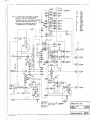
INTRODUCTION 8086/S-100 CPU - INTERRUPT The Tecmar 16 bit S-lOO CPU-Interrupt board is based on the INTEL 8086 microprocessor and consists of the CPU with 8 levels of vectored interrupt and S-lOO interface with extended addressing. The board complies with the proposed IEEE 16 bit S-lOO protocol providing the ability to fetch and store two- bytes at a time which effectively doubles the previous capacity of the bus. This board can access I/O devices (byte-at-a-time or word at-a-time) through memory locations or I/O ports providing compatibility with conventional S-lOO 8080/Z80 systems. The board permits a one megabyte address space by utilizing a 20 bit address which is formed using the extended address protocol in the proposed standard for the S-lOO bus allowing full use of the 8086. The INTEL 8086 microprocessor is fully described in INTEL's MCS-86™ User's Manual. (Please refer to this since the information on the 8086 integrated circuit will not be repeated in this manual.) The primary features include eight 16 bit registers, hardware multiply and divide, hardware trace mode, and inherently position independent code via base registers. The 8086 machine language provides a 5 to 10 fold base increase in performance over the 8080. Assembly language programs for the 8080 can be easily translated into 8086 programs with approximately a factor of two increase in performance. The CPU-Interrupt board can be used with 8-bit memory boards, but memory capable of 16-bit transfers will allow faster operation. The board has a power-on jump feature to FFFFO H where a monitor is provided (on the PROM-I/O board) • Depending upon the crystal installed, be set up to operate at 4, 5, or 8 MHz. the system can The 8086 uses a full 16-bit address for I/O devices unlike the 8080 which duplicates the 8-bit I/O address on A15-A8 and A7-AO. The board is shipped with all jumpers in a standard configuration but can easily be changed to take advantage of the optional features, such as the wait state generator. (Copyright (C) 1981 TecMar Inc.) 2-A