1
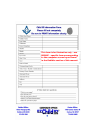
The heading of a news or press release should contain the name of the organization—such as “South Dakota
Freemasons”—the date that you want the information to be released, (in most cases: FOR IMMEDIATE
RELEASE), and the name, telephone number or perhaps email address where the editor can get additional
information. This is illustrated in the examples we’ve attached.
There are five key elements that MUST be in every piece of promotional material you develop:
Who
What
Where
Why
When
These five elements should also appear in the very first part of your news release and, in a condensed form,
in the headline. Again look at the examples to see how they have been incorporated into our sample releases.
Who, of course, could be “South Dakota Freemasons” and your local Masonic Lodge, Lodge or a group of
Lodges in an area. Typically, other sponsoring bodies in our SDCHIP events are the South Dakota Dental
Association and the South Dakota Sheriffs’ Association (local law enforcement) and other local organizations.
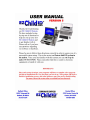
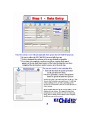
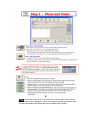
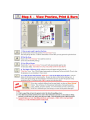
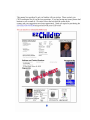
What is where you describe a Child Identification Program (SDCHIP) that consists of a brief Webcam
interview with the child to show his or her mannerisms and speech patterns, as well as Webcam still
photographs. Additionally, fingerprints are recorded by scanner. All three items—interview, photograph
and fingerprints are recorded on a CD, which can then be used for Amber Alert.
A Toothprint® impression and a DNA cheek swab are taken by professional dental personnel. It is very
important that you make the statement that ALL materials are given to the parent or guardian once the
child has been processed. Only the parent permission form is retained by the Masons. It is also important to
state that the program is at no charge and no appointment is necessary. If a community fundraising event is
to be held as well, include information on that event as well.
Where and When. You would be amazed at how often a news release goes out WITHOUT the location,
date, and time of the event. This is not only embarrassing but makes more work for the editor. State these
facts clearly, using the full day and date and using AM or PM to note the times. If the location is not
generally well known, write in short directions using landmarks, street names and route numbers where
possible, perhaps include a small map. Make it easy for your potential customers to find you. It is sometimes
also a good idea to insert a name and telephone number at the end of the release where people may call for
more information. But unless there is someone to answer this telephone at least during normal business
hours who is prepared to answer many calls and questions from the general public, it may be best to leave
this out of your release. Be careful.
Why. The reason we do Child Identification Programs is to facilitate the recovery, and, if necessary,
identification of lost, missing or exploited children, once they are found. Please consider the enormous
sensitivity of this purpose. No one ever wants to think that his or her child may become a victim and to dwell
on this aspect may even have a negative impact without the proper explanation. It is best to use phrases
such as “to promote child safety.”
The new SDCHIP brochure handles this in one short paragraph that may be copied into your release: The
South Dakota Freemasons Child Identification Program (SDCHIP) addresses the alarming fact that one
child is reported missing every 43 seconds in the United States each year. While most are found, many are
not. Also, the abduction of children is both under-reported and rapidly increasing in our society.
Although the next information comes under the “who” element, it belongs at the end of the release and is
called “the motherhood statement.” SDCHIP programs are a vital part of our Masonic Family Awareness
Program, the goal of which is to educate the public as to who Freemasons are and what we do. We do this by
associating Freemasonry with things that are relatively well known. The following is a typical “motherhood
statement” that belongs at the end of the release but before the final “for more information” paragraph:
“Freemasonry was constituted in South Dakota in 1863 and currently there are over 6600 Masons in over 90
Lodges in South Dakota communities.”
This is a lot of information, but it really positions South Dakota Freemasonry as a worthwhile organization.
This kind of information can produce a positive image and help change negative perceptions held by the
public and by too many members of the press.
A-2