1
21
The learning procedure aims at minimizing the error function (18) by finding the weight
vector which minimizes MSE. The underlying idea of error-backpropagation is that all nodes
of the network (not only the output node) are responsible for the network error due to their
influence on the signal propagated through the network. During the training phase the signal’s
direction is reversed, so that each learning round starts at the output node with the network
error being fed into the network. This error signal is then backpropagated layer by layer until
it reaches the basic input nodes. Hereby, the global network error is distributed over all
relevant nodes. Since each node’s signal can only be changed by adjusting its link weights
these are the object of the learning process. The adjustment of each weight w is proportional
to its marginal influence on the network error. This method implies a linear approximation of
the error function in the environment of the current weight values.
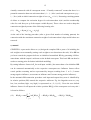
(19)
∆w = –µ
∂MSE
∂w
If we plot the network error as a function of all link weights we get a mountain-like error
surface in which equation (19) describes the steepest way down with the exogenous learning
rate µ determining the stride (gradient descent algorithm). We omit further details and
formulas of the parameter adjustment procedures here,27 but it should be noticed that they
depend on the fuzzy types, the fuzzy AND operator and the rule weighting option.
The neural learning operations described so far reflect the standard error-backpropagation
algorithm (EBP) whose results do not necessarily account for the specific needs of a fuzzy
rule base. Sometimes, it is suitable to exclude the adaptation of certain parameters or to
restrict their adjustment ranges in order to keep the whole fuzzy system in a sound state.
Otherwise it might happen that the EBP-algorithm ruffles the FB leaving us with a
degenerated system that lacks economic interpretability (e. g. negative or extremely small
fuzzy set widths or fuzzy set centres that can hardly be distinguished from each other). In
these situations special MEBP-filters intervene in order to get a differentiated fuzzification of
the relevant crisp data intervals (e. g. by ensuring a minimum overlap of adjacent fuzzy sets).
The underlying idea of the adjustment-filters is the formulation of various criteria for a sound
FRB and to inhibit the learning process whenever one (or more) of these criteria is running
the risk to be violated.
27
See Kooths (1998), section 2.5.3.4.