1
Laboratory Practices
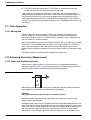
Figure 2
General Purpose Distillation Apparatus
2.5 Filtration
Filtration separates particulates from an aqueous sample. It uses a porous medium that
retains particulates but allows liquids to pass through. It is useful for removing turbidity
(which may interfere in colorimetric analyses) from water samples.
Two methods of filtration are most frequently used: vacuum filtration and gravity filtration.
2.5.1 Vacuum Filtration
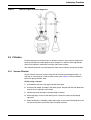
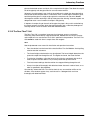
Vacuum filtration uses both suction and gravity to draw the liquid through the filter. An
aspirator or vacuum pump is used to create suction (see Figure 3). Vacuum filtration is
faster than gravity filtration alone.
To filter using a vacuum:
1. Use tweezers to place a filter paper into the filter holder.
2. Place the filter holder assembly in the filtering flask. Dampen the filter with deionized
water to ensure adhesion to the holder.
3. Position the funnel housing on the filter holder assembly.
4. While applying a vacuum to the filtering flask, transfer the sample to the filtering
apparatus.
5. When the filtration is complete, slowly release the vacuum from the filtering flask and
transfer the solution from the filter flask to another container.
11