1
Why Monitor Waterbirds and their Habitats?
We anticipate that setting and obtaining local management objectives will require knowledge about
waterbird use, setting habitat condition objectives, the ability to assess the efficacy of management
actions (e.g. accounting for management costs in terms of use-days or supported populations), and /
or the ability to learn how to improve management (Lyons et al. 2008). Also, depending on the
management objective, the survey activity will often entail assessing status and trends of habitat
conditions or waterbird numbers. Resulting data may be used to calculate wetland unit-specific
waterbird use-days, document migration chronologies, and explore relationships between waterbird
counts, management actions and habitat condition.
Survey Units
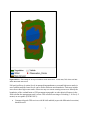
A survey unit is a single managed or unmanaged wetland unit. Boundaries of the unit should be
fixed throughout the season and across years to ensure data comparability. See Standard Operating
Procedure (SOP 1).
Site, survey unit, and observer codes will be assigned by IWMM staff to ensure that they do not
duplicate codes in use by other
cooperators. Please contact the Science
Coordinator
(iwmmprogram@gmail.com) for
assistance in assigning codes. If you do
not know the codes, please leave them
blank, but make sure that you fill in
name details so that the codes can be
completed subsequently. Please refer to
SOPs 2 - 5 for additional information
regarding pre-survey logistics and
preparation, including equipment
needed for waterbird and vegetation
surveys.
Survey timing and schedule
Waterbird and unit condition surveys are completed weekly or biweekly during the non-breeding
waterbird season. See SOP 2.
3