1
Picture Quality Analysis System
PQA500
How It Works
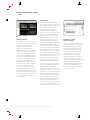
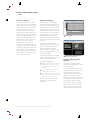
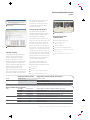
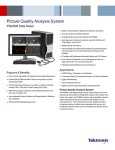
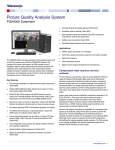
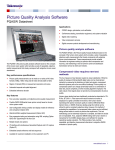
UI Top Image of PQA500.
System Evaluation
The PQA500 can be used for installation, verification and trouble-shooting of
each block of the video system
because it is video technology
agnostic: any visible differences
between video input and output from
processing components in the system
chain can be quantified and assessed
for video quality degradation. Not only
can CODEC technologies be assessed
in a system, but any process that has
potential for visible differences can also
be assessed. For example, digital
transmission errors, format conversion
(i.e., 1080i to 480p in set-top-box
conversions), 3-2 pull-down, analog
transmission degradation, data errors,
slow display response times, frame rate
reduction (for mobile transmission and
videophone teleconferencing) and more
can all be evaluated, separately or in
any combination.
2
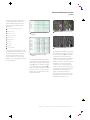
The PQA500 takes two video files as
inputs: a reference video sequence and
a compressed, impaired or processed
version of the reference. First, the
PQA500 performs a spatial and
temporal alignment between the two
sequences, without the need for a calibration stripe embedded within the
video sequence. Then the PQA500
analyzes the quality of the test video,
using measurements based on the
human vision system and attention
models and then outputs quality measurements that are highly correlated with
subjective assessments. The results
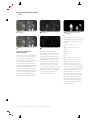
include overall quality summary metrics,
frame-by-frame measurement metrics
and an impairment map for each frame.
The PQA500 also provides traditional
picture quality measures such as PSNR
(peak signal-to-noise ratio) as an
industry benchmark impairment diagnosis tool for measuring typical video
impairments and detecting artifacts.
Each reference video sequence and
test clip can have different resolutions
and frame rates. The PQA500 can
provide picture quality measurement
between HD vs SD, SD vs CIF or any
combination. This capability supports a
variety of repurposing applications such
as format conversion, DVD authoring,
IP broadcasting and semiconductor
design. The PQA500 can also support
measurement clips with unlimited
sequence duration, allowing a full length
movie to be quantified for picture quality
through various conversion processes.
PQA500 • www.tektronix.com/products/video_test/
Prediction of Human
Vision Perception
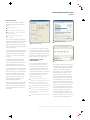
PQA500 measurements are developed
from the human vision system model
and additional algorithms have been
added to improve upon the model
used in the PQA200/300. This new
extended technology allows legacy
PQR measurements for SD while
enabling predictions of subjective
quality rating of video for a variety of
video formats (HD, SD, CIF, etc.). It
takes into consideration different display
types used to view the video (for
example, interlaced or progressive and
CRT or LCD) and different viewing
conditions (for example, room lighting
and viewing distance).