1
2.4
SPECTROMETER PERFORMANCE
2.4.1
RESOLUTION
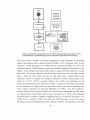
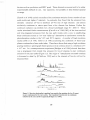
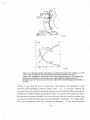
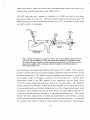
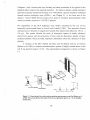
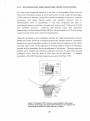
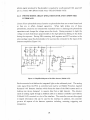
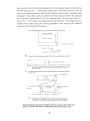
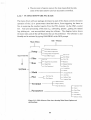
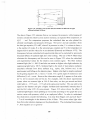
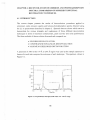
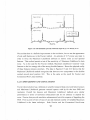
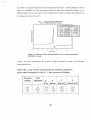
The resolving power and reciprocal dispersion (see Figure 2.14) o f a spectrometer are
closely related quantities. While the dispersion determines the separation o f two
wavelengths, the resolving power determines whether this separation can be
distinguished.
Each monochromatic beam itself forms a diffraction pattern, the
principal maxima o f which are represented by the order number m. Between such
maxima, secondary maxima exist whose intensities decrease as the number o f ruled
lines, N, exposed to the incident radiation increases. In practice these secondary
maxima are very much weaker than the principal maxima.
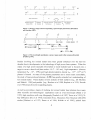
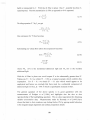
If w e use Rayleigh's
criterion, two lines o f equal intensity will just be resolved when the maximum o f one
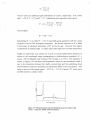
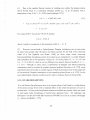
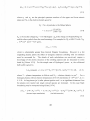
falls on the minimum o f the other. The resolving power is defined as X/A X = mN
(for a plane grating), where A A, is the minimum wavelength separation which can be
resolved. Mack et a l [1932] have shown that a slit width W gives rise to an image
width on the focal curve, o f a concave grating in a Rowland mount, corresponding to
a wavelength interval A X =Wd/R, where d is the inter grove spacing and R is the
radius o f curvature o f the grating. Slit widths o f 10 and 20 j.im, combined with a 1200
lines/mm grating o f radius o f curvature = 2.2 m, were used throughout the
photoabsorption/emission experiments described in this thesis which gives rise to an
instrumental line width o f between 0.038 and 0.076 A.
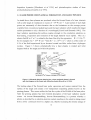
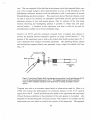
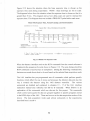
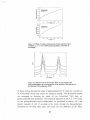
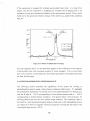
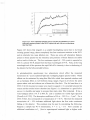
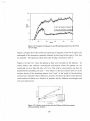
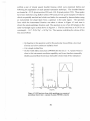
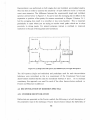
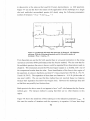
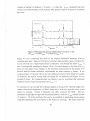
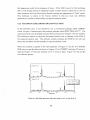
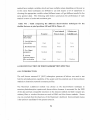
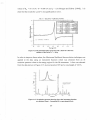
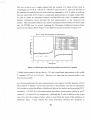
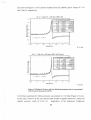
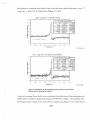
In order to critically assess the performance o f the instrument, in terms o f its
resolution, it was decided to examine the wavelength separation o f some well known
closely spaced lines in the emission spectrum o f a laser produced aluminium plasma.
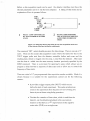
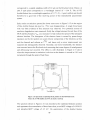
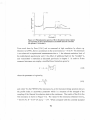
Using a 1200 lines/mm grating the wavelength
range accessible with the
spectrometer is approximately 80 to 500 A, as determined by the angle o f incidence
on the grating and the available length o f bellows connecting the grating chamber to
movable detector.
45