1
Freescale Semiconductor, Inc.
Application Note
The new serial bus standard, developed by computer industry leaders,
was made necessary by the increasing demands of greater PC
performance.
Freescale Semiconductor, Inc...
One of the classes of the USB is the human interface device (HID). HIDs
include devices such as mice, gamepads, and keyboards. Computers
today have incredible computing power which lends themselves to
telephony, audio/visual applications, and a wide range of HIDs. The
diversity of these potential HIDs also requires the USB to allow small,
periodic transfer operations for low-speed devices such as mice and
keyboards and isochronous operation for high-speed applications such
as telephony and audio.
Because these different types of devices require varying speed
performance and bandwidth, USB has capabilities for high-speed
devices that operate at 12 megabits per second (MBPS) and low-speed
devices that operate at 1.5 MBPS.
Additional hardware improvements that make USB a more desired way
of installing new peripherals include:
•
Unique USB connector design. Unlike previous connector
scenarios in which every peripheral had its own connector design
with a varying number of pins, USB uses two standard types of
connector:
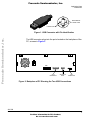
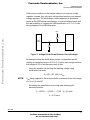
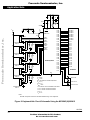
– An upstream connector. See Figure 1 for a description of the
upstream connector.
– A downstream receptacle
•
The cable between the connectors can have two configurations,
depending upon the speed of the peripheral it is connecting:
– For high-speed devices, there is a power wire, a ground wire,
and two shielded signal wires that carry the USB data.
– For low-speed devices, the configuration is the same except
the signal wires are not shielded because they are less
sensitive to line noise.
AN1748
2
For More Information On This Product,
Go to: www.freescale.com