1
with a wordlength. For example, ns(10) is an unsigned, 10-bit type. tc(256) is a 256-bit
signed type.
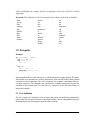
Keywords. The following is a list of keywords. None of them can be used as identifier.
$bin
$cycle
$dec
$display
$dp
$finish
$hex
$sfg
$trace
$option
always
dp
else
fsm
hardwired
if
initial
in
ipblock
ipparm
iptype
lookup
ns
out
reg
sequencer
sfg
sig
state
stimulus
system
tc
then
use
3.0 Datapaths
Example:
dp accum( in a : tc(8) ) {
reg acc : ns (8);
sfg clear {
acc = 0;
}
sfg add {
acc = (acc + a);
$display("acc=", acc);
}
}
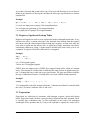
This datapath defines a single input port, a, which accepts 8-bit signed signals. The datapath contains an accumulator acc and two instructions, clear and add. Both of them contain
operations on the accumulator. The ‘add’ instruction also contains a simulation directive:
a display statement. The datapath only specifies the available instructions, but not the
schedule of those instructions. It is the task of a controller (to be described further) to
define this schedule.
3.1 Port definition
The list of ports of a datapath is a list of input and output port definitions separated by
semicolons. The list opens and closes with round brackets. In case a datapath has no ports,
the datapath port list including the round brackets is absent.
GEZEL Language Reference 2.0
(c) 2003, 2004, 2005 Patrick Schaumont
2