1
A WBDEV TUTORIAL
23
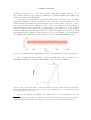
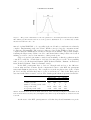
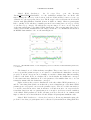
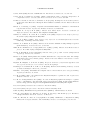
Figure 12. The posterior distribution of the three Wald parameters v, a and Ter . The dashed gray
lines indicate the modes of the posterior distributions at v = 5.57, a = 1.09 and Ter = .33. The 95%
credible intervals for v, a and Ter extend from 4.12 to 8.00, from 0.80 to 3.52 and from .09 to .36,
respectively.
Ludwig, 2008; Gelman & Hill, 2007; Rouder, Sun, Speckman, Lu, & Zhou, 2003; Shiffrin,
Lee, Wagenmakers, & Kim, 2008). In our shifted Wald example, each subject is assumed to
generate their data according to the shifted Wald distribution, but with different parameter
values. We extend the individual analysis and assume that the parameters for each subject
are governed by a group Normal distribution. This means that all individual participants are
assumed to have their shifted Wald parameters drawn from the same group distribution,
allowing the data from all the partipants to be used for inference, without making the
unrealistic assumption that participants are identical copies of each other.
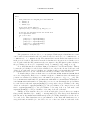
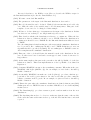
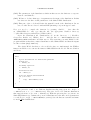
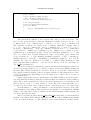
The model file that implements the hierarchical shifted Wald analysis is shown below:
model
{
# prior distributions for group means:
v.g ~ dunif(0,10)
a.g ~ dunif(0,10)
Ter.g ~ dunif(0,1)
# prior distributions for group standard deviations:
sd.v.g ~ dunif(0,5)
sd.a.g ~ dunif(0,5)
sd.Ter.g ~ dunif(0,1)
# transformation from group standard deviations to group
# precisions (i.e., 1/var, which is what WinBUGS expects
# as input to the dnorm distribution):
lambda.v.g <- pow(sd.v.g,-2)
lambda.a.g <- pow(sd.a.g,-2)
lambda.Ter.g <- pow(sd.Ter.g,-2)
# data come From a shifted Wald distribution
for (i in 1:ns)
#subject loop
{
# individual parameters drawn from group level
# normals censored to be positive using the