1
Outdated Publication, for historical use.
CAUTION: Recommendations in this publication may be obsolete.
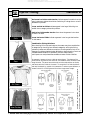
Wardrobe Action Plan
Leader’s Guide
2. Get organized. Discuss ways to organize a closet.
3. Decide on a basic color plan for each family member.
Building around neutrals as a family will permit clothing to be passed to other
members. Bring paint chips from a paint store to help members visualize these colors.
4. Plan for variety.
Show examples of basic apparel styles, such as T-shirts, slacks, and sweaters. Discuss
options they could use to vary these pieces for working in an office, going to a sporting
activity, or cooking at home.
5. Plan for flexibility.
Have members refer to What Worked? What Didn’t? handout. They will be looking at
the hours spent in various activities and rank them based on the interests of their
household.
6. Buy basic styles — they l ast longer.
Refer participants to the handout Basic Styles for Everyone. As they think about their
lifestyle and the wardrobe plan, they will be determining how much of their wardrobe
should be divided into work, school or lifestyle apparel.
7. Find good quality — it pays.
The handout Quality Details in Apparel will help participants recognize what details to
look for when evaluating apparel construction. Discuss what on-grain and off-grain
mean, and what effect it will have on apparel (garments twist around body).
8. A well-planned wardrobe doesn’t have to cost a fortune.
Ask participants about their shopping strategies for apparel.
9. Take care of the clothes you have.
Read and follow care labels. Refer to Spot Attack for help in stain removal tips, Wash
Wonders 101 for washing and label information, and Drying Details for drying tips.
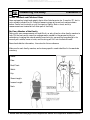
Distribute the handout Measuring the Body and discuss how to get family members
measurements. Recommend carrying a tape measure at all times. Having this information
with a tape measure makes shopping easier. Apparel can be laid flat and quickly measured
across the garment at fit points to check if sized to fit.
Discussion Questions:
Q. Begin with describing some terms: style, basic styles, and fit points. You may have
others after discussion.
A. Style refers to the cut of the structural lines within a garment, such as a double-breasted
blazer, an A-line skirt, and straight leg pants.
2
• Kansas State University Agricultural Experiment Station and Cooperative Extension Service •