1
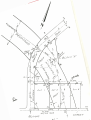
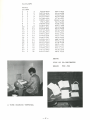
Programming — W hy and How (continued from page 22) of us are using a com puter of one kind or another. Who, though, is doing your calculations and I do mean who is pushing the buttons? If you are using Co-Go, it is a group from M.I.T. Is it a tape deck or a card supplied by the manufacturer or another program supplied by a soft-ware company? If so, there is a strong chance that you have not seen the program, you do not know how it works and you are unable to modify it to suit your needs. If this makes you feel that you have turned your cal culations over to hirelings and you are on longer in control but that the machine is beginning to rule your life then I strongly suggest that you learn a com puter language. I do not think that it particularly matters which language but I myself have a preference for BASIC as that is the language with which I am most fam iliar. With no more than four hours of instruction, we at George Brown have developed several programs, all written in BASIC, which do all kinds of work. Some of these are as follow s: COROTE — rotates and moves co ordinates from one axis to another. (Ed. Note — Law and Surveying (continued from page 17) Sacred 66 A further exam ple of this strange phenomenon was observed, again during my form ative years, surveying in northern Ontario, where posts planted during the original survey (Circa 1900) may still be found in place, the scribed lettering still legible. Imagine if you will, the surveyor having found an original post marking a lot corner, carefully cross referencing the centre of the post before replacing it to the nearest hundredth of a foot with a standard iron bar. He would then proceed to the intersection of two road allowances where, on finding two original posts on opposite sides of the inter section, he would measure between them only to discover that they were 63 feet apart rather than the sacred 66. W ithout any apparent pangs of conscience, he replaced one o f the posts with great precision sum m arily yanked out the other and planted an S. I. B. 66 feet from the first. The moral (if such is the term) to be drawn from these anecdotes has two elements. The first is that roads are not necessarily the same width as m ight be indicated by the plan of survey that creates them. The second suggests that the unalterable status of original monu ments is not fu lly understood. Re-establish Lim it To pursue the matter a bit further, CO PLOT — plots a co-ordinate file on the teletypew riter by a series of asterisks to within on e/tw elfth of an inch. CURVAL — calculates curve align ment problems — gives all curve data and stake out information. SURVEY — closes, balances, cal culates new points, de termines areas; in short, does all usual survey calculations. You too, can learn in a very short time enough programming to solve all your usual survey problems, calculate your payroll, keep a status file on current jobs or even play noughts and crosses with the kids. If you would like a copy of any of the above programmes or a user’s manual for SURVEY, please drop us a line and we will be glad to send them out. There is no charge and you are com pletely free to chop and change as you see fit. The address is Harry Coupland, O.L.S., George Brown College of Applied Arts and Technology, 51 Teraulay Street, Toronto, Ontario. Illustrations fo r the article are on pages 24, the question arises as to the manner of re-establishing street lim its after the original evidence has disappeared. The responses must sound redundant and w ill come as no surprise — the lim it must be re-established from the best available evidence of its original location. If any conclusions may emerge from this dissertation, surely the most pro minent would be the acknowiedgm ent that I have barely scratched the surface of the philosophy I set out to examine. The status and affect of conventional lines, surveys by unqualified surveyors, fences, and lines by parol agreement, etc. come to mind and with the kind fo r bearance of publisher and reader, we may examine some of these in future Quarterlies. G uest Editorial (continued from page 3) acceptable, practical experience. We cannot understand why the A.O.L.S. Council is so reluctant to investigate and evaluate our Program. We intend to demonstrate to business, industry, prospective students, parents, alumni and the general public the uniqueness of Ryerson and the kind of education it offers. Our program is and w ill be open for further comments and improvements, and we would appreciate receiving from you any remarks or suggestions in order that revisions, if necessary, may be made. — 23 — A SAMPLE SURVEY JOB In order to illustrate our method of computation using the program “ Survey” we enclose the following pages: Page 1 — a sample page of notes with all necessary points numbered. Page 2 — the two input files — Coup 2 for set up — Coup 3 for lim its and area. Page 3 — the results of a computer run showing limits and area. Page 4 — a. listing of the final co ordinates taken from file Coup 1. It is interesting to note that the time required to set up and prepare the inputs for his job was approximately one hour. This compared with 7 minutes of real time to run but only 24 seconds of computer time to compute. Obviously a typist could save even more time. In cidentally, the errors that occur are usually the same errors that one would find if the job was calculated in the conventional manner; i.e. wrong quad rant, transposition of figures, or data left out. i, 26 and 27) Regional Group News (continued from page 21) of the subdivision. J. G. O’Grady, a solicitor having a great deal of experience in property law and a background including experience in the land titles office at Toronto, spoke on possessory boundaries, stressing not only the period of time over which the possession had been in existence, but also its character and the fact there can be no break in the time, that is the posession must be every day for 10 years with no break even for one day. Mr. O’Grady supported his talk with judge ments handed down by the Courts regarding possessory boundaries and also in some cases, judgements handed down by the Appeal Court. As Mr. O’Grady pointed out, it was interesting to note the high percentage of successful appeals. G. MacKay of the Director of Titles Office, spoke on water boundaries, he also included in his address, judicial decisions on some of the more interest ing cases he had encountered. After a lunch break, the meeting resumed with the three speakers forming a panel and answering questions from the floor. This proved to be quite a lively afternoon session. We were very fortunate to secure speakers of the cailbre we did and we thank these men fo r giving up the time necessary to make the meeting a success.