1
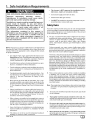
1. Safe Installation
Requirements
FIRE, EXPLOSION, AND ASPHIXIATION
HAZARD
Improper
adjustment,
alteration,
service,
maintanence
or installation
could cause death,
personal injury and/or property damage.
Installation or repairs made by unqualified persons
could result
in hazards
to you and others.
Installation MUST conform with local codes or, in
the absence of local codes, with codes of all
governmental authorities havingjurisdiction.
adequate
nace as specified
these instructions.
combustion
and ventilation
in "3. Combustion
A,
Always install furnace to operate within the furnace's
intended temperature-rise
range with a duct system which
has an external static pressure within the allowable range,
as specified
in "Technical
Support Manual"
of these instructions.
See furnace rating plate.
When a furnace is installed so that supply ducts carry air
circulated
by the furnace to areas outside the space containing the furnace, the return air shall also be handled by a
duct(s) sealed to the furnace casing and terminating
outside the space containing
the furnace.
furnace
This furnace
buildinq.s
44001 102102
for installation
as specified
is not to be used
or structures
under
in a residential
garage
in "2. Installation"of
these
for temporary
construction.
heating
•
Install
•
Unit MUST be installed so electrical components
tected from direct contact with water.
correct
and return
in mo-
air ducts.
filter type and size.
are pro-
of
and/or improper
use can shorten
hazards for you, the owner.
the life of the unit and
The U.S. Consumer Product Safety Commission encourages
installation of carbon monoxide alarms. There can be various
sources of carbon monoxide in a building or dwelling. The
sources could be gas-fired clothes dryers, gas cooking
stoves, water heaters, furnaces, gas-fired fireplaces, wood
fireplaces.
injury and/or
and odorless
or when the
Therefore,
to help alert people of potentially dangerous
ca rbon
monoxide
levels, you should have a commercially
available
carbon monoxide
alarm that is listed by a nationally
recognized testing agency in accordance
with Underwriters
Laboratories Inc. Standard
for Single and Multiple Station Carbon
Monoxide
Alarms, ANSI/UL
2034 or the CSA 6.19-01
Residential Carbon Alarming Devices installed and maintained
in
the building or dwelling concurrently
with the gas- fired furnace
installation
(see Note below). The alarm should be installed as
recommended
by the alarm manufacturer's
installation
instructions.
Air" of
Never test for gas leaks with an open flame. Use a commercially available soap solution made specifically
for the
detection of leaks to check all connections,
as specified in
"6. Gas Supply and Piping, Final Check"of
these instructions.
must be installed
instructions.
supply
gas produced when fuel is not burned completely
flame does not receive sufficient oxygen.
air to the fur-
Combustion
products must be discharged
outdoors.
Connect this furnace to an approved
vent system only, as specified in "4. Vent and Combustion
Air Piping" of these
instructions.
A gas-fired
Seal around
Carbon
monoxide
can cause serious
bodily
death. Carbon monoxide
or "CO" is a colorless
as speci-
and Ventilation
•
abuse
create
Use only the Type of gas approved
for this furnace
(see
Rating Plate on unit). Overfiring
will result in failure of heat
exchanger
and cause dangerous
operation.
(Furnaces
can be converted
to L.R gas with approved
kit.)
Provide
is NOT approved
for installation
trailers
or recreation
vehicles.
Your unit is built to provide many years of safe and dependable
service providing
it is properly installed and maintained.
However,
NOTE: This furnace is design-certified by the CSA International
(formerly AGA and CGA) for installation in the United States and
Canada. Refer to the appropriate codes, along with this manual,
for proper installation.
•
This furnace
bile homes,
Safety Rules
The information
contained
in this manual is
intended for use by a qualified service agency that
is experienced
in such work, is familiar with all
precautions
and safety procedures
required
in
such work, and is equipped with the proper tools
and test instruments.
Install this furnace only in a location and position
fied in "2. Installation"of
these instructions.
•
B,
There can be numerous
sources of fire or smoke in a building
or dwelling.
Fire or smoke can cause serious
bodily injury,
death, and/or property
damage.
Therefore,
in order to alert
people of potentially dangerous
fire or smoke, you should have
fire extinguisher
and smoke alarms listed by Underwriters
Laboratories
installed and maintained
in the building or dwelling
(see Note below).
Note:
The manufacturer
of your furnace does not test any alarms
and makes no representations
regarding any brand or type
of alarms.
C.
To ensure safe and efficient
do the following:
operation
of your unit, you should
1.
Thoroughly
read this manual and labels on the unit. This
will help you understand
howyour
unit operates and the hazards involved with gas and electricity.
Do not use this unit if any part has been under water. Immediately call a qualified service technician to inspect the unit
and to replace any part of the control system and any gas control which has been under water.
Never obstruct
the vent grilles,
or any ducts that provide
air to the unit. Air must be provided
for proper combustion
and ventilation
of flue gases.
C21