1
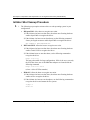
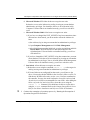
Extended Planned Site Failover with Full Failback Procedure
I
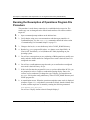
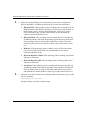
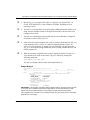
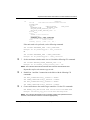
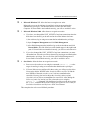
5. Continue the planned failover process with the “Running the Extended Planned
Failover Program File Procedure.”
Running the Extended Planned Failover Program File
Procedure
T
T
T
T
T
T
T
T
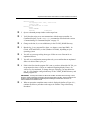
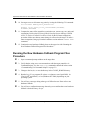
1. Open a command prompt window on the target host.
2. Verify that the script server can communicate with the target controller via
Command Scripter. Use the cmdscript command as described in the section
“Communicating Via Command Scripter” on page 5-2.
3. Change to the bat, sh, or vms subdirectory in the CLONE_HOME directory.
4. Run the hsg_fo.xxx program file (where .xxx denotes .com (OpenVMS), .sh
(Tru64, AIX, and Solaris), or .bat (Windows NT/2000), depending on your
operating system.
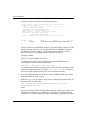
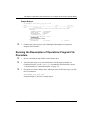
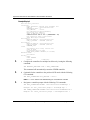
5. You will see a message asking what type of failover to run. Enter p for a planned
failover.
6. You will see a confirmation message that asks you to confirm that a planned
failover is desired. Enter y for yes.
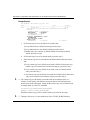
7. You will see a message asking what type of planned failover to run. Enter e for an
extended planned failover.
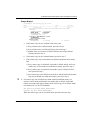
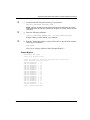
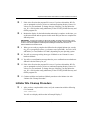
8. If this is the first time the program file is run, or you have deleted the .RC file, you
are prompted to select a verbose or condensed reporting display. Press v for
verbose or c for condensed. To change the type of display, you must delete the
app_fo.rc file from the config subdirectory of the CLONE_HOME directory and
run the program file.
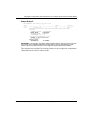
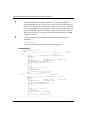
IMPORTANT: If a script encounters an abnormal condition and exits with a warning or error,
abort the scripting activities and perform the remaining steps manually. These procedures are
located in the HP StorageWorks Data Replication Manager HSG80 ACS Version 8.7P
Failover/Failback Procedures Guide listed in Table 1.
T
10–4
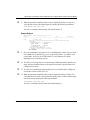
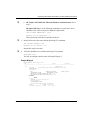
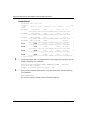
9. Continue with the planned failover at the target site with “Target Host Setup
Procedure.”
Data Replication Manager HSG80 ACS Version 8.7P Scripting User Guide