1
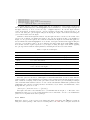
also to figures, code sniplets, examples, etc. And I do want to limit the amount of repetition of
information. For example, if I use a certain example in an article I might want to use the same
(identical) example in a book or a presentation or lecture notes. If I only copy the example I have
to maintain several sources, and over time I will not remember which of them is normative. As
a side effect, I also want to optimise document creation and limit the LATEX or document class
specific code in my documents.
2
The Story
2.1
The Short Story
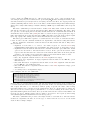
I have written papers, done a lot of presentations, provided some book chapters, still working on a
book, participated in many research proposals and projects, and created tons of notes and figures.
As of early 2009, most of that information was distributed over the repositories of different projects
and organisations I worked for, in some document management systems, on several websites,
databases, my preferred email client (which changed twice), different computers and later even
different external hard drives and USB3 sticks. Looking for specific text or a particular figure
could easily end in a days work. Tools like desktop search engines can help to find ’stuff’. I used
them, but if they found anything it was hard to maintain the context it was written in and some
formats or sources were out of reach for them. Even worse with figures and the many versions
some of them evolved in over time. After multiple jobs and several years, all I had is kind of a
very messy base of knowledge, well-hidden somewhere, thus very difficult to locate and impossible
to maintain.
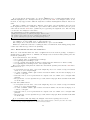
So I started early 2009 to re-organise my ’stuff’. At the same time, I did realise that moving
away from LATEX was part of the problem (and I thought using the other text processor would
help, it actually didn’t, long-term). So LATEX became, again, the text processor of choice, and
with it the ability for a complete different approach to organise my ’stuff’. This was the moment
the SKB was created. SKB stands for Sven’s Knowledge Base. The LATEX package skb, described
in this article, forms part of a larger software system that uses SQL4 ite databases, a small PHP5
framework, Apache for HTML6 access and recently also a Java port.
My document repository uses the skb package, so most of my documents are eventually
LATEX documents. I am saying eventually because I still use other tools (like Microsoft’s Powerpoint), but integrate their output in my repository. I do all my figures these days using Inkscape,
so the source is SVG7 and the output for LATEX documents PDF8 . For editing the text files I
do flip between UE Studio and LeD. Parts of the content (such as acronyms and bibliographic
information) are maintained in SQLite databases and exported to LATEX. This package now shows
how I build my documents.
2.2
The Long Story
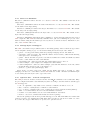
Over several years of writing documents (articles, books, reports, standards, research proposals)
ideas and concepts became distributed (actually a euphemism for ’hidden’) within many many
documents (in all sorts of formats) located at many many locations (such as local file system,
3 Universal
Serial Bus (USB)
Query Language (SQL)
5 PHP Hypertext Preprocessor (PHP)
6 Hyper Text Markup Language (HTML)
7 Scalable Vector Graphics (SVG)
8 Portable Document Format (PDF)
4 Structured
2