1
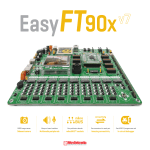
UM10940 NXP Semiconductors LPC General Purpose Shield (OM13082) 1. Introduction The LPC General Purpose Shield Board has been designed to complement NXP’s range of LPCXpresso MCU development boards by providing easy access to several commonly used peripherals. The LPC General Purpose Shield plugs into the top-side expansion connectors of LPCXpresso V2, V3, and MAX boards. The LPC General Purpose Shield connectors have the standard Arduino UNO R3 pins plus the additional expansion connections available on LPCXpresso V3 boards. LPCXpresso V2 and MAX boards may still be used with the LPC General Purpose Shield but not all features of the Shield will be available. LPCXpresso™ is a low-cost development platform available from NXP, supporting NXP's ARM-based microcontrollers. The platform is comprised of an Eclipse-based IDE and low-cost target boards which include an on-board debugger. LPCXpresso is an end-toend solution enabling embedded engineers to develop their applications from initial evaluation to final production. This document describes the LPC General Purpose Shield (“LPC GP Shield”) hardware. 2. Feature summary The LPC GP Shield includes the following features: 128 x 64 LCD dot matrix display connected via SPI 4 user LEDs and 5 position joystick, controlled via an NXP PCA9535BS I²C port expander NXP LM75ADP temperature sensor connected via I²C Bosch BMI160 inertial measurement unit (3-axis accelerometer and 3-axis gyroscope, I²C) Potentiometer Features requiring LPCXpresso V3 board: o SD/MMC card slot o Ethernet RJ45 connector o CAN terminal block o Micro AB USB device connector 2.1 Board layout and settings This section provides a quick reference guide to the main board components, configurable items, visual indicators and expansion connectors. The LPC GP Shield board layout is shown in Fig 1. NOTE: The BMI160 IMU sensor, High speed CAN transceiver chip and NXP PCA9535BS I²C port expander are below the LCD display. To view them, gently push in the LCD stands from the back of the shield board; however it is not recommended to do this unless absolutely needed in order to avoid damage to the board. UM10940_OM1382.docm User manual All information provided in this document is subject to legal disclaimers. Rev. 1.0 — 20th October 2015 © NXP B.V. 2015. All rights reserved. 3 of 14