1
ii
???
APPENDIX
plication of numerical models and the use of computer codes, (b) to present
solutions to the models discussed in this book, and (c) to investigate how
these solutions vary as various input parameters are changed. Chap. ??
also contains exploratory problems that one may pursue on one's own.
The NUFT code is available from the International Groundwater
Modeling Center (IGWMC) Golden, Colorado, USA. The version described in this section and distributed with this book runs on IBMTM compatible personal computers under Microsoft WindowsTM . The NUFT code is
written in the computer language C. It also runs on UNIXTM workstations.
The code has been veried by comparison with analytical solutions of ow
and transport problems, and with numerical solutions by other computer
codes (Lee et al., 1993).
This appendix contains some information on the NUFT code, and guidelines on how to use it. It is written under the assumption that the potential
user of NUFT is familiar with the principles of numerical techniques, especially with those of the method of integrated nite dierences. It explains
how NUFT numerically solves the ow and contaminant transport models
that are described in the various sections of this book, focusing on the problems presented in Chap. ??. No prior experience with numerical methods or
the use of computer codes is required.
.1 General Description
.1.1 Objectives
NUFT was written in order to solve subsurface environmental problems,
especially problems that require the prediction of contaminant migration,
e.g., the analysis of remediation methods, and the study of nuclear waste
isolation problems. The original emphasis was on the transport of multiple
components in a multiphase ow system. It has recently been extended to
make it applicable to a wide variety of saturated and unsaturated ow and
contaminant transport problems. However, the more experienced user will
recognize how the general case is reduced to the particular cases of saturated
ow, single phase ow under saturated or unsaturated ow conditions, etc.
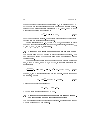
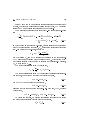
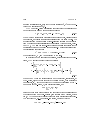
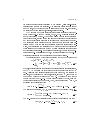
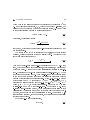
Essentially, NUFT solves the partial dierential equations that describe
the mass balances of multiple components transported within multiple phases
that together occupy the the void space of a porous medium domain. The
components and the phases are assumed to be in local thermodynamic equilibrium, as described in by Bear and Nitao (1995). The results of the calcu-