1
5
GUIDELINES
WARNING. Before proceeding, make sure that the safety instructions (Chapter 2) are complied
with, and that there are no contraindications for the patient (paragraph 2.6). It is obviously
essential to be familiar with the content of the manual.
5.1 SmarTherapy, Sigma and the medical device used for the treatment
SmarTherapy is originally based on the solid foundations of DeltaHyperthermia but is designed to
amplify in some pathologies the results of hyperthermia and extend the field of application to areas
that can normally not be treated with hyperthermia (for example in acute phases). However, over time
it has become a new form of therapy mainly because of the synergy resulting from the combination of
DeltaHyperthermia and Controlled Transdermic Cryothermia. The term synergy is specifically used in
this context to highlight the fact that the effect goes far beyond the advantages resulting from the
combination of individual effects.
Some of these effects are not directly related to the operator, like standard DeltaHypethermia, while
others require the continuous presence and interaction of the therapist during each session. This adds
greater flexibility to SmarTherapy, because it enables operators to select for each pathology both the
optimum mode, but also an alternative mode that still guarantees good performances. In other words,
therapists can choose the operating mode according to whether they desire a greater flexibility or
prefer to supervise the patient more closely in consideration of the fact that the anxiety of the patient
could affect the results of the physical rehabilitation.
SIGMA is the only device that is currently able to offer all the therapeutic modes that are normally part
of SmarTherapy.
SIGMA enables to carry out a wide range of "thermal cycles" on the muscular-skeletal tissues, all of
which are characterized by a high degree of accuracy both in terms of temperature control and of
location of the induced phenomenon.
This device enables to apply all types of local hot and cold treatments, and specifically those that are
typical of SmarTherapy and that leverage the synergy between Hyperthermia and Cryothermia.
The methods used to add or subtract heat to/from the tissues enables to fully exploit the effects of the
temperature variations induced locally in specific areas of the muscular-skeletal system.
Temperature accuracy and localization are essential requirements to achieve a physiological reaction
of the desired type and intensity, but are also specifically used to avoid exposing healthy tissues to the
treatment.
To prevent unnecessary exposure, it is obviously important for the therapist performing the treatment
to have an appropriate diagnosis and be able to accurately identify the point where the treatment has
to be applied. In the event of the slightest doubt or if the volume to be treated is particularly extended,
it is possible to move the application point by 1÷2 cm from session to session.
SIGMA uses a combination of two techniques: DeltaHyperthermia to heat the tissues and Controlled
Transdermic CryoThermia to cool them. Both treatments are performed using different applicators.
For each therapeutic mode, it is obviously necessary to set a specific number of parameters. This
operation can be practically and easily carried out by means of the menus that can be managed
through the keyboard. There are 11 modes available, each with one or more options specifically
designed to allow operators to perform a targeted treatment.
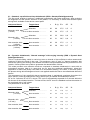
The selected mode is shown on the display by means of a number on the left and the acronym in the
center, while the number on the right represents the actual selected option.
The mode substantially defines the type of thermal therapy, while the option enables to adapt the
therapy to the structure, thickness and type of treated tissues and to the desired intensity.
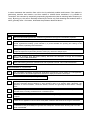
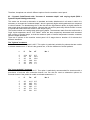
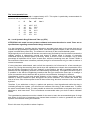
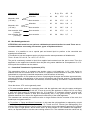
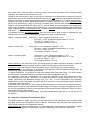
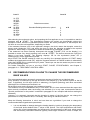
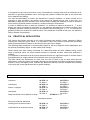
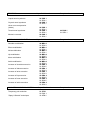
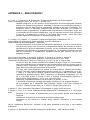
The table that follows provides an overview of the applications for which SIGMA is currently used.
The numbers in the left boxes correspond to the related descriptive paragraphs.