1
1
Overview
Fiber
Calibration lamps
Quartz, Th−Ar
Prism
Fiber
FEM
Starlight
Guider
GAM mirror
On the telescope
In the coude room
Viewer
Fiber
CCD
Focus
Image slicer
Shutter
Iodine cell
Spectrograph
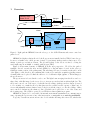
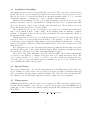
Figure 1: Light path in CHIRON, from the telescope to the CCD. Elements under user control are
pink-colored.
CHIRON is a high-resolution fiber-fed echelle spectrometer installed at the CTIO 1.5-m telescope.
It can record multi-order echelle spectra of single objects (stars) with spectral resolution up to R =
80 000, 3 pixels per resolution element. The spectral format on the detector is fixed, covering the
wavelength range from 4200Å to 8800Å without gaps [TBC].
Figure 1 shows main elements of CHIRON from the user perspective. We follow the path of
starlight, directed towards the fiber module (FEM) by a diagonal mirror located in the telescope
GAM (at certain position of the pickup arm). The star image is focused on a mirror with a hole; most
of the light goes into the fiber, the remaining halo is reflected towards the acquisition/guiding camera.
A small prism can be placed behind the mirror to feed calibration light (quartz or Th-Ar lamps) to
the spectrometer.
The spectrometer is located in the coude room. The light beam emerging from the fiber can be reshaped into a slit-like image by the image slicer, to increase spectral resolution without light loss. The
slicer can be moved out of the way to work with bare fiber image (with spectral resolution decreased
to R ≈ 30 000) or to mask the fiber by slits (increase the resolution at the expense of light loss). A
viewer with manually-activated mirror is used only for troubleshooting, to see the sliced image. Other
user-controlled elements are the shutter, iodine cell which can be placed in or out of the beam, and
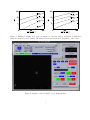
the focusing stage. The CCD is operated by a GUI-driven data-acquisition program.
CHIRON is designed to be very stable, its internal environment is maintained at constant temperature. Opening the spectrometer, any other intervention or manipulation are strictly prohibited.
To specify observations, astronomer needs to decide whether the image slicer is needed, whether the
2