1
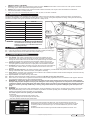
GENERAL SAFETY CONTINUED: DO NOT switch the heater off by disconnecting it from the mains. ALWAYS set the switch on the burner to the ‘OFF’ position and allow the cooling cycle to finish, before disconnecting from the mains. DO NOT use an external fuel tank. Only use the tank that is fitted to the heater, and only fill it when the heater has cooled down. Ensure that the heater is correctly turned off When not in use for an extended period, store in a safe, dry area, out of reach of children. 2.specification Infrared heater suitable for well ventilated indoor applications. Clean burning unit operates on paraffin, kerosene or diesel. Unit produces an impressive 125,000 Btu/hr on highest setting. 53ltr tank allows a max. of 20 hrs running time dependant on setting, making this unit extremely economical. Complies with rigorous standards and is fitted with a safety cut-out. Model IR37.V2 Heat Output 28 / 37 kW Rating 95,000 / 125,000 BTU/hr Fuel Paraffin / Kerosene / Diesel Running Time Per Filling (Max) Fuel Tank Capacity 20 hrs Fig.1 53 Litres Heated Area 25000ft³ / 708m³ Voltage / Hz 230V / 50Hz Rated Amps 5A Net Weight WARNING! Fig.2 33 Kg This heater is not suitable for use with Bio-Diesel; use of Bio-Diesel will damage the filter and seals. Damage caused by use of Bio-Diesel will not be covered by warranty. 3. Assembly 3.1.Slide axle through Wheel Frame and attach wheels, washers and cotter pins (Fig.1). 3.2. Place main structure on Wheel Frame and fasten with nuts and bolts provided (Fig.2). 3.3. Attach Safety Guard to front of heater with bolts provided (Fig.3). Fig.3 4. Operating conditions 4.1. Principles of Operation 4.1.1.Fuel System: This heater is equipped with an air pump that operates off of the electric motor. The pump forces air through the air line connected to the fuel tank, drawing fuel to the nozzle in the burner head. Air also passes through the nozzle where it mixes with the fuel and is sprayed into the combustion chamber as a fine mist. 4.1.2.Quick-Fire Ignition: A transformer sends high voltage to a two pronged spark plug. The spark ignites the fuel/air mixture as it is sprayed into the combustion chamber. 4.1.3.Air System: A fan is turned by the heavy duty motor, which forces air around and into the combustion chamber, where it is super-heated and forced out the front of the chamber. 4.1.4.Electrical System Protection: The heater’s electrical system is protected by a circuit breaker that protects the system components from damage. If the heater fails, check the fuse first, and replace if necessary. 4.1.5.Flame Sensor: The heater uses a photocell to see the flame in the combustion chamber. Should the flame extinguish, the sensor will stop electrical current and the heater will shut off. 4.1.6.Tip-over Sensor: The heater uses a tip-over sensor. 4.2. Fuel: the heater operates with paraffin, kerosene or diesel fuel. DO NOT use any other type of fuel. 4.3. When used in the construction or agricultural industries ensure that the safety regulations in force are adhered to with regard to distances from flammable materials and any other specified substances. WARNING! Air contaminants taken into the heater may affect the heat output, damage the unit and may cause health problems. Example: Bodyshop filler dust/paint overspray will damage the motor bearing, clog the filter and compressor and contaminate the combustion chamber causing flame flutter and health hazards. Please note that any parts damaged by filler dust/paint overspray will not be covered by warranty. Additionally, a cleaning charge will be made for any heaters damaged by filler dust/paint over spray. 4.4. Ventilation: WARNING! Only use the heater in well ventilated areas. Careful consideration must be given to the placing of the heater to provide safe and comfortable heating. Ensure continuous ventilation is provided to the heater operating area. A ventilation opening must run to the outside of the premises in which the heater is to be operated. The heater requires a fresh air opening of at least 2800cm². For Example: - A two car garage door should be open at least 11cm. - A single car garage door should be open at least 16cm. - Two 76cm windows should be open at least 20cm. Although this heater operates with diesel fuel, when the temperatures are below 0°C, diesel additives are required to maintain the diesel's viscosity. Typically diesel can cloud in freezing conditions and will start to gel. You will need additives for your fuel in these conditions. Kerosene/Paraffin does not start to gel until the ambient temperature is around -40°C. Original Language Version IR37.V2 Issue: 4 - 19/04/11