1
CFHT Observatory Manual - Observatory (Sec.4)
http://www.cfht.hawaii.edu/Instruments/ObservatoryManual/CFH...
CEA can read the image in less than 35 seconds while maintaining a
very low readout noise - this is, in fact, the shortest readout time ever
achieved on a mosaic operated at CFHT!
As it was not possible to accommodate a 1 square degree field of view
with the old cage of the early days (still in use for CFH12K), a new,
upper end of the telescope had to be constructed. Designed at CFHT in
collaboration with the "Division technique" of the French "Institut
National des Sciences de l’Univers", it was built by a Californian
company, L&F Industries, now a division of Erie Press Systems. 13
meters above the main mirror of the telescope, this upper end offers a
platform ready to host the equipment needed to give to the camera a nice
view of the sky.
The parabolic main mirror of the telescope does not produce, alone, a
good image of the whole field of view; a wide field corrector (WFC) is
installed in front of the camera. With four lenses 50 to 80 cm in
diameter, in a structure two meters long for 660 kg, the WFC is an
amazing piece of optics designed at the Herzberg Institute for
Astrophysics (Victoria, Canada) and built in France by
SAGEM/REOSC. The resultant pixel size is slightly less than 0.2
arc-seconds: a good resolution giving a reasonable sampling of the
images even with good seeing (images of 0.5" were already observed
several times). To complement the corrector, 5 filters were also
fabricated by SAGEM. They follow relatively closely the Sloan Digital
Sky Survey filter set, but for the blue filter, which makes good use of the
superior transparency of the Mauna Kea sky and the UV enhanced WFC
glass.
To accommodate the changes in focal length of the telescope with
temperature, and the focus position changes induced by the various
filters, the camera must be able to move along the optical axis of the
telescope. The focus stage assembly (FSA) accommodates this motion,
supporting the camera and its shutter on a motorized stage bolted on top
of the upper end platform. In order to follow the apparent motion of the
sky due to the Earth’s rotation, two small cameras fix on stars outside of
the field of view, providing automatic guidance of the telescope and
measurements of the focal changes.
The guiding cameras (’guiders’) are installed underneath the FSA, and
like the FSA, were designed and built at HIA. To compensate for
telescope oscillations due to windshakes or telescope tracking anomalies,
an Image Stabilizing Unit (ISU) made of a tip/tilt plate is attached to the
beam on top of the wide field corrector. Designed at "Observatoire de
Paris", the ISU is servo-controlled through the guiders’ signals.
The integration and overall control of MegaPrime, and all the utilities helium lines, glycol hoses to eliminate all the heat sources on top of the
telescope, electronics box housings, hundreds of yards of cables or optics
fibers - and the development of the observing environment specific to
MegaPrime, have been CFHT’s work.
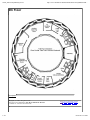
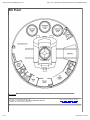
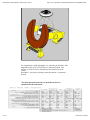
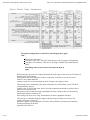
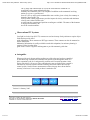
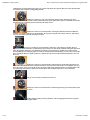
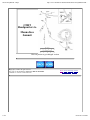
The various components of MegaPrime
Overall weight added to the telescope: 11,000 kg
Weight to be lifted up and down when the instrument
is installed/removed: 5700 kg
Observing runs: 15 to 18 days periods centered on the
7 of 17
08/07/04 11:26 PM