1
of view properly. Second, as police departments worldwide have
migrated to digital photographic equipment, they have discovered that the standard digital cameras they have purchased do
not respond to ultraviolet light well at all [1, 2]. Even a special
line of Fuji digital cameras that were converted to be more
responsive in the UV and infrared (IR) wavebands did not have
much sensitivity in the UV waveband. This is because of their
Bayer color filter arrays that made it possible to shoot color
images but also tended to block UV light and because silicon
sensors were more responsive to infrared light than to UV light.
There was also additional blocking of UV light from the optics.
The camera systems were sold with a standard Nikon lens that
was not ideal for UV imaging. This is due to the antiref lection coating on the lens as well as absorption characteristics of
the optical glass. This made the transmission less effective in
the UV band than if the lens were designed for UV work and
built out of the best UV optical materials. But the worst part
was that these cameras were sold as part of forensic camera
packages with a UV bandpass filter that unfortunately passed a
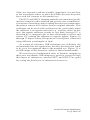
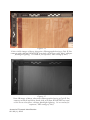
substantial amount of infrared (IR) light as well. When forensic
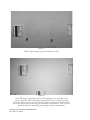
photographers attempted to record ref lected UV images, they
invariably recorded an almost purely IR image. This is because
the camera is much more responsive to IR light than it is to UV
light, and because common photographic light sources contain
very little UV light.
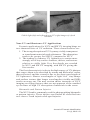
Some forensic photographers assumed that the camera just
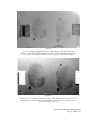
did not work correctly in the UV waveband, because the resulting images looked nothing like UV images they had previously
taken with film. The user’s manual and other documentation
provided by Fuji did not shed any light on the matter. Other
photographers incorrectly assumed that the images they were
capturing were UV, when the images they obtained were really
IR. A number of incorrectly designated images were published
in the forensic literature, which further added to the confusion,
because IR images of common scenes generally look nothing
like their UV counterparts.
One of the primary motivations of this paper is to describe
how to take UV digital images correctly, using the right equipment, in the hopes that forensic photographers will buy the
equipment they need and start using the technique again. After
all, if one follows the correct procedure, it is much easier, faster,
and less expensive than UV film photography ever was. This
may lead to a resurgence of these techniques, which are also
made easier and more powerful than ever by the recent developJournal of Forensic Identification
63 (1), 2013 \ 47