1
Improving Operational Efficiency
with Distributed Motion Networks
The Problem:
Our production manager, Bob, realized that the list of steps required to replace one of his
amplifiers was rather lengthy and could result in extended downtime, particularly if he could not locate
one or more of the required components.
1
2
3
4
5
6
7
8
9
10
11
12
13
14
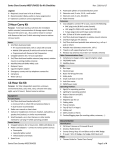
Non-Networked Digital Servo Axis
Replace amplifier
Find user manual
Find machine drawings with switch setting info
Set all dip switches
Find computer
Find communication cable
Find servo communication software
Make sure software is loaded on computer
Connect cable and establish communications
Locate axis configuration file
Transfer file to servo axis
Disconnect and return computer to storage
Replace the documentation so others can find it again
Power up system
Figure 1. Steps needed to replace a standard digital amplifier.
Computer-based communication hardware, software, and operating-system technology can
change several times during an industrial control’s life expectancy. As a result, servo equipment and
configuration software may become dependent on obsolete technology. For example, several issues
related to digital servo configuration have surfaced because of Microsoft’s operating system migration
from DOS to Windows to Windows XP Service Pack 2 to Vista, and the disappearance of the hardware
RS-232 serial communication port in favor of USB and Ethernet ports.
Ideally, a highly maintainable system would be immune to technological changes in computer
hardware or software, and would be free from reliance on highly trained personnel and specialized
equipment for replacement. For the ultimate in maintainability, the machine controller would
automatically detect that a hardware component had been swapped out and initiate an automatic
configuration procedure so that the new hardware would match the old hardware. Such a system is
possible with a digital motion network.
The Solution:
A machine controller using a distributed network topology directly supports the uptime and
performance needs of a lean manufacturing production process. Figure 2 depicts a distributed control
system using the MECHATROLINK high speed motion network to link axis and I/O nodes to the
controller. The network supports several types of servo motion as well as variable frequency drives
(VFDs). If necessary, multiple controllers can be linked by an inter-controller process network.
Production data and/or process setpoints can be transferred to and from an upper level
MES/ERP/SCADA network via an Ethernet connection.
Copyright © 2008 Yaskawa Electric America • 2121 Norman Drive S. • Waukegan, IL. 60085 • 800-927-5292 (YASKAWA) • www.yaskawa.com
3