1
Chapter 10
Fire Safety Equipment
Volume 3 Section 2
Part 3 BA 72/03
Fire Protection (and Gas Detection) Systems
Description of Typical Equipment and Access
Arrangements
10.26 Selected rooms in tunnel service buildings,
enclosed sumps and other hazardous areas are afforded
fire protection (see BS 5839: Part 1: 1988) and, where
appropriate, gas detection. Plant room automatic fire
extinguishing systems and enclosed-sump foam
flooding systems are controlled and monitored through
their respective fire control panels. Condition-status and
alarms are relayed to the tunnel SCADA system, as
appropriate.
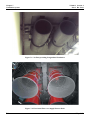
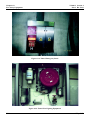
10.27 Figure 10.1 shows a typical tunnel panel
containing nitrogen foam and sump gas-detection
equipment.
10.28 Automatic gas-discharge fire-extinguisher and
extraction systems are normally installed in rooms
within the tunnel service buildings that contain
operational safety-related equipment, typically the high
and low-voltage electrical switchgear, battery, computer
and communications equipment rooms. Older systems
may still use Halon gas, now prohibited from new
installations. Installations that are more recent may use
carbon dioxide (CO2). The most recent systems use
synthetic gases mixed with nitrogen/argon that, unlike
CO2, are breathable in the concentrations concerned.
10.29 Gas detection systems are sited in locations
where measurements of gas may be required: eg cable
chambers, sumps and draw-pits, tunnel service
buildings and control and switch rooms. Different gases
may be measured, typically oxygen and hydrocarbons.
The systems trigger events to contain the situation once
a set percentage of the lower explosive limit (LEL) has
been passed. Typically pumps are inhibited when
concentrations reach 30% LEL and then a nitrogen
foam flooding system is initiated. In service buildings,
when 20% LEL is reached, alarms and automatic fire
extinguishers are triggered and at 30% LEL the gas
extraction fan is inhibited.
10.30 A nitrogen-foam flooding system comprises a
number of nitrogen gas cylinders, a foam generating set,
a control system and a number of foam-generator
nozzles. The foam-generator nozzles are installed
within the sump and are connected by pipework to the
foam-generating set, normally located in a tunnel panel.
A bore closure may be required to safely access the
foam generating set.
May 2003
10.31 Care should be taken to ensure that whole
systems are tested periodically, where for example
servicing and testing of parts of the system are
scheduled at different times or undertaken by different
contractors.
Maintenance of foam flooding systems
10.32 Maintenance should be in accordance with the
manufacturer’s recommendations. Typically at intervals
of 3 months, the panels should be cleaned to ensure
readability and checked to ensure they are clear of
alarms. Checks should also be made for signs of
deterioration of flexible pipework, and signs of
corrosion, damage or overheating of all connectors and
earths. Nitrogen cylinder pressure should be determined
and all cylinders checked for security.
10.33 A test fire should be carried out together with a
purging of foam, in accordance with the manufacturer’s
recommendations, at intervals typically of 12 months.
Care must be taken to ensure that no one is within or
adjacent to the sump when this test is conducted.
Maintenance of gas detectors
10.34 This should be in accordance with the
manufacturer’s recommendations. The services of a
specialised contractor are normally required. Typically,
the operation of the systems should be tested, electrical
connections checked and the sensors re-calibrated at
intervals of 3 months: sensors should be replaced at
intervals, typically of 12 months.
Maintenance of automatic fire extinguishers
10.35 Inspection of the automatic gas discharge and
extraction system should be carried out at intervals
typically of 3 months. Specialised servicing of the
system, in accordance with the manufacturer’s
recommendations, should be carried out at the same
time, together with testing which may require the
control system to be manually overridden.
Maintenance of fire detection systems
10.36 This should be in accordance with the
manufacturer’s recommendations.
10.37 Testing and maintenance of the fire alarm and
detection system should be carried out in accordance
with BS 5839: Part 1. This requires daily checks of
panels and log books and selective system and
equipment testing at weekly, 3-monthly, yearly and
5-yearly intervals.
10/3