1
Chapter 4. Interfaces
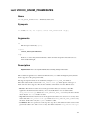
Subject of this interface type is raw VBI data, as sampled off a video signal, or to be added to a
signal for output. The data format is similar to uncompressed video images, a number of lines times
a number of samples per line, we call this a VBI image.
Conventionally V4L2 VBI devices are accessed through character device special files named
/dev/vbi and /dev/vbi0 to /dev/vbi31 with major number 81 and minor numbers 224 to 255.
/dev/vbi is typically a symbolic link to the preferred VBI device. This convention applies to both
input and output devices.
To address the problems of finding related video and VBI devices VBI capturing and output is also
available as device function under /dev/video. To capture or output raw VBI data with these
devices applications must call the VIDIOC_S_FMT ioctl. Accessed as /dev/vbi, raw VBI capturing
or output is the default device function.
4.7.1. Querying Capabilities
Devices supporting the raw VBI capturing or output API set the V4L2_CAP_VBI_CAPTURE or
V4L2_CAP_VBI_OUTPUT flags, respectively, in the capabilities field of struct v4l2_capability
returned by the VIDIOC_QUERYCAP ioctl. At least one of the read/write, streaming or asynchronous
I/O methods must be supported. VBI devices may or may not have a tuner or modulator.
4.7.2. Supplemental Functions
VBI devices shall support video input or output, tuner or modulator, and controls ioctls as needed.
The video standard ioctls provide information vital to program a VBI device, therefore must be
supported.
4.7.3. Raw VBI Format Negotiation
Raw VBI sampling abilities can vary, in particular the sampling frequency. To properly interpret the
data V4L2 specifies an ioctl to query the sampling parameters. Moreover, to allow for some
flexibility applications can also suggest different parameters.
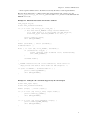
As usual these parameters are not reset at open() time to permit Unix tool chains, programming a
device and then reading from it as if it was a plain file. Well written V4L2 applications should
always ensure they really get what they want, requesting reasonable parameters and then checking if
the actual parameters are suitable.
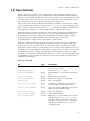
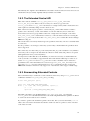
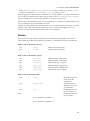
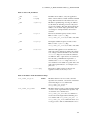
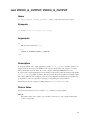
To query the current raw VBI capture parameters applications set the type field of a
struct v4l2_format to V4L2_BUF_TYPE_VBI_CAPTURE or V4L2_BUF_TYPE_VBI_OUTPUT, and call
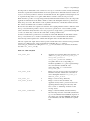
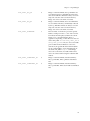
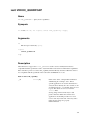
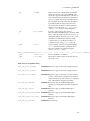
the VIDIOC_G_FMT ioctl with a pointer to this structure. Drivers fill the struct v4l2_vbi_format vbi
member of the fmt union.
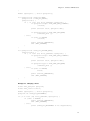
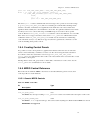
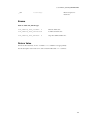
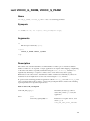
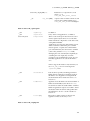
To request different parameters applications set the type field of a struct v4l2_format as above and
initialize all fields of the struct v4l2_vbi_format vbi member of the fmt union, or better just modify
the results of VIDIOC_G_FMT, and call the VIDIOC_S_FMT ioctl with a pointer to this structure.
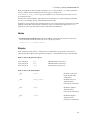
Drivers return an EINVAL error code only when the given parameters are ambiguous, otherwise they
modify the parameters according to the hardware capabilites and return the actual parameters. When
the driver allocates resources at this point, it may return an EBUSY error code to indicate the
returned parameters are valid but the required resources are currently not available. That may happen
for instance when the video and VBI areas to capture would overlap, or when the driver supports
multiple opens and another process already requested VBI capturing or output. Anyway, applications
75