1
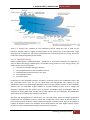
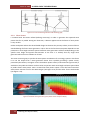
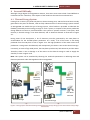
A USERS GUIDE TO ENERGYPLAN March 4, 2009 4 Areas of Difficulty Although a large degree of EnergyPLAN is intuitive, there were some areas which I found difficult to understand at first. Therefore, a few aspects of the model are discussed in more detail here. 4.1 Thermal Energy System Coming from a country very little CHP plants or district heating exist, and the fact that heat is usually generated at the point of demand, I did not fully understand how a thermal energy system worked. As EnergyPLAN can model this type of energy system, a brief outline is provided. To illustrate the flexibility induced by thermal energy storage on such a system, a snapshot of the power production during different scenarios is presented below. The system in question contains a CHP plant, wind turbines, a thermal storage, a hot‐water demand, and an electrical demand as illustrated in Figure 4‐1. During times of low wind‐power, a lot of electricity must be generated by the CHP plants to accommodate for the shortfall power production. As a result, a lot of hot water is also being produced from the CHP plant as seen in Figure 4‐1a. The high production of hot water means that production is now greater than demand, and consequently, hot water is sent to the thermal storage. Conversely, at times of high wind‐power, the CHP plants produce very little electricity and hot water. Therefore, there is now a shortage in of hot water so the thermal storage is used to supply the shortfall, as seen in Figure 4‐1b. Note: This system can be simulated by choosing the Technical Optimisation 2: Balancing Heat and Electricity Demands under the Regulation tab in EnergyPLAN. Wind Power Wind Power Electricity Demand Electricity Demand CHP Plant CHP Plant Hot Water Demand Hot Water Demand Thermal Storage Thermal Storage (a) (b) Figure 4‐1: Energy System with district heating and thermal energy‐storage during (a) a low‐wind scenario and (b) a high‐
wind scenario | Areas of Difficulty 25