1
Evaluating Fragmentation Factors for Performance
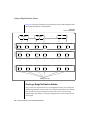
Increasing Granularity for Backup and Restore
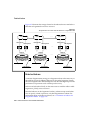
Consider the following two backup and restore factors when you decide how
to distribute dbspaces across disks and coservers:
■
Data availability. When you decide where to place your tables or
fragments, remember that if a device that contains a dbspace fails, all
tables or table fragments in that dbspace are inaccessible even
though tables and fragments in other dbspaces are accessible. The
need to limit data unavailability in the event of a disk failure might
influence which tables you group together.
■
Cold versus warm restores. Although you must perform a cold
restore if a dbspace that contains critical data fails, you need to
perform only a warm restore if a noncritical dbspace fails.
Reduce the impact of cold restores by careful choice of the dbspace
where you store critical data, which includes the root dbspace on
each coserver and all dbspaces that contain logical or physical logs.
If possible, store critical data on separate disks.
For more information about backup and restore, see the Backup and Restore
Guide.
Evaluating Fragmentation Factors for Performance
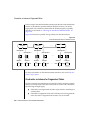
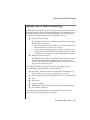
As you formulate your fragmentation strategy, keep these interrelated factors
in mind:
■
Even balance of processing across all coservers
■
Parallel-processing advantages for tables that are fragmented across
coservers
■
Increased query-processing speed if the database server can
eliminate fragments
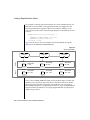
Balancing Processing Across All Coservers
For decision-support applications, the primary fragmentation consideration
should be to balance processing evenly across all coservers. When one or two
coservers are working harder than others, the entire system slows down.
Fragmentation Guidelines
9-11