1
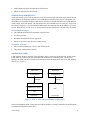
LAN Emulation (LANE) developed by the ATM Forum MPOA developed by the ATM Forum Classical IP over ATM (RFC1577) Classical IP enables you to route IP packets over an ATM network. Each end station knows both its IP and ATM addresses and sends these addresses to an ATM address resolution protocol server (ATMARP). The ATMARP server maintains an address table and uses this table to translate between IP and ATM addresses within a single virtual sub network. The end stations query the ATMARP server for each SVC set-up. If an end station is using PVC's, the ATM network administrator must manually map the IP addresses to virtual circuits. When the SVC or PVC is set up, the end stations use the connection to send and receive IP packets. Classical IP Disadvantages: The communication between sub-networks requires routers. No QoS is provided. Broadcasts and multicasts are not supported. Only IP is supported. Other protocols cannot be used. Classical IP Advantages: CIP provides the advantages of IP on a fast ATM network. The network configuration is flexible. LAN Emulation (LANE) LANE emulates the MAC sub layer of the OSI model, which is used by all classical LANs. In other words, LANE makes an ATM network look and behave like an Ethernet or Token-Ring LAN. Thanks to this principle, the ATM network is invisible to the existing protocols and applications such as IP, IPX, NetBios, DECnet, etc. (Figure 7). Higher Layers Higher Layers IP/IPX/NetBios/etc. IP/IPX/NetBios/etc. NDIS/ODI NDIS/ODI LAN Emulation Adaptation Layer (AAL5) MAC ATM Physical Layer Physical Layer Figure 7: ATM + LANE compared with 802.3 or 802.5 LANs In the LAN Emulation Model, end systems (end stations, bridges etc.) directly attached to the ATM network are called LAN Emulation Clients (LEC). ATM Technology 20