1
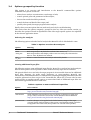
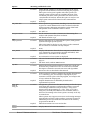
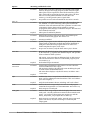
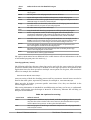
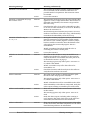
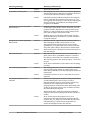
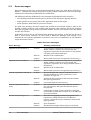
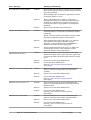
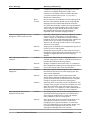
Warning Message
Contradictory assertions make
execution infeasible.
Meaning and Remedy
Action
If more iterations are desired, use the option -const_iter
to increase the limit.
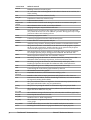
Reasons
Some part of the current subprogram is subject to more
than one assertion on the number of executions
(“repeats”) of this part, and these assertions are contradictory. For example, a given call is asserted to repeat
at most 3 times in one assertion, while another asserts
at least 7 executions of this call. Bound-T considers this
subprogram completely infeasible (in this context).
The contradictory assertions are reported as errors
before this warning is given.
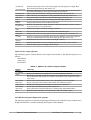
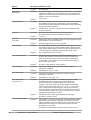
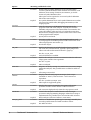
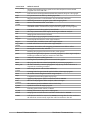
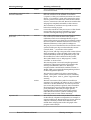
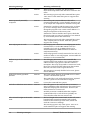
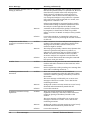
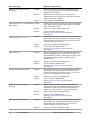
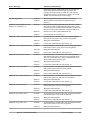
Duplicated symbol : dup-conn :
first-conn
Action
Correct the assertions if they are in error. If the classification of the subprogram as infeasible is correct,
consider asserting the subprogram as not used.
Reasons
The symbol-table in the target executable file contains
two (or more) occurrences of the same symbol
(identifier) which are not distinguished by scope or
other context. Moreover, these two occurrences connect
the same symbol to different machine-level values (eg.
different addresses) so the symbol is ambiguous.
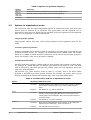
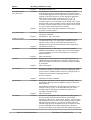
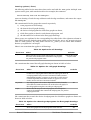
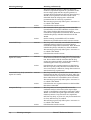
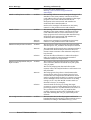
The part first-conn describes the first occurrence of the
symbol and the part dup-conn describes the current
(second, third, ...) occurrence of the symbol.
The first-conn and dup-conn parts each consist of three
fields separated by colons: the kind of the symbol, the
symbol (identifier) itself, fully qualified by scope; and
the machine-level value connected to the symbol.
The symbol-kind is one of “Subprogram”, “Label”,
“Variable” or “Source line”.
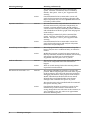
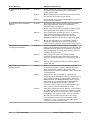
This warning often occurs with compiler-generated
symbols for subprogram prelude and postlude code,
return point addresses, and so on. The target
compiler/linker created the file with this content, or
Bound-T did not recognize the distinguishing features
of these insignificant symbols.
This warning is emitted only if the command-line
option -warn symbol is enabled (it may be enabled by
default). The option -warn no_symbol suppresses this
warning.
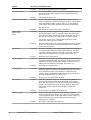
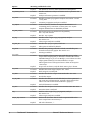
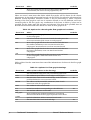
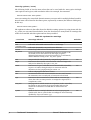
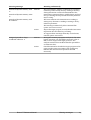
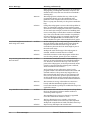
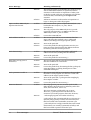
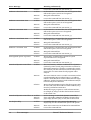
Dynamic call.
Action
The first occurrence of the symbol is accessible (to
assertions, for example), the others are not (or must be
referred to via their addresses). No action by the user
can correct this problem in general. Some executablefile formats have several symbol tables that may be
partly redundant. There may be target-specific
command-line options that control which symboltables Bound-T scans for symbols. Omitting some
tables may remove some of these warnings.
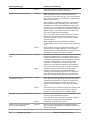
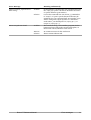
Reasons
The call instruction under analysis defines the address
of the callee by a dynamic computation; for example, a
register-indirect call. Bound-T will try various forms of
analysis to find the possible callee addresses and
include those subprograms in the call-graph of the
program under analysis.
Bound-T Reference Manual
Warning messages
97