1
5. PROTOCOL COMMUNICATION
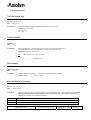
5.1. Communication Port Parameters
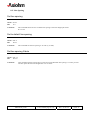
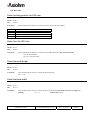
Default RS232 parameters:
(can be set by the user) Baud rate
Parity bit
Data bits
Stop bits
: 115200
: None
:8
:1
5.2. IEEE 1284 communication
The interface is always initialized to the Compatibility Mode, a conventional, unidirectional host-to-peripheral
interface. From the Compatibility Mode, the host may transmit data to the peripheral using the Compatibility Mode or
direct the interface into an another mode.
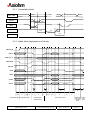
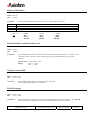
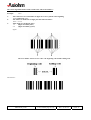
In our case, the communication mode used is the NIBBLE MODE, an asynchronous, reverse (peripheral-to-host)
channel, under control of the host. Data bytes are transmitted as two sequential 4-bit nibbles, using four peripheral-tohost status lines. This communication mode consists of more phases:
•
•
•
•
•
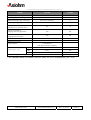
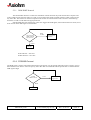
Compatibility
Mode signal
name
reverse data transfer phase: When data transfers from the peripheral to the host.
reverse host busy data available phase : When the peripheral has data to transmit
reverse host busy data not available phase: When the peripheral has no more data to transmit.
reverse idle phase: When no data transfer is in progress and the host is waiting for peripheral
data. When data are available, the peripheral will cause the interface to go to the reverse interrupt
phase.
reverse interrupt phase: A phase that provides the mechanism for the peripheral to alert the host
that it has data to transfer. While in this phase, the host may cause the interface to go to the
termination phase.
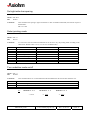
Nibble
Mode signal
name
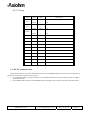
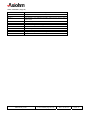
Description
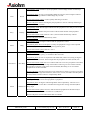
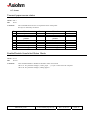
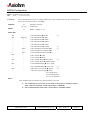
Compatibility mode: Set low by host to select peripheral.
nSelectIN
1284 Active
Negotiation phase: Set high in conjunction with Host Busy set low to request an IEEE1284
mode.
Reverse data transfer phase / Reverse idle phase: Set high to indicate that the bus direction
is peripheral-to-host. Set low to terminate IEEE 1284 mode and to set bus direction to hostto-peripheral.
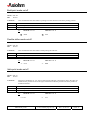
Compatibility mode: Driven high to indicate that the peripheral has encountered an error in
its paper path. The meaning of this signal varies from peripheral to peripheral. Peripherals
shall set nFault low whenever PError is set high.
Negotiation phase: Set high to indicate IEEE 1284 support, then follows nFault
AckDataReq (nDataAvail).
PError
Reverse data transfer phase : Data bit 2 then 6
Reverse idle phase: Set high until the host requests a data transfer, then follows nFault
(nDataAvail).
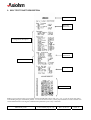
Compatibility mode: Forward channel data.
Data (8->1)
AD 8->1
Negotiation phase: Extensibility request value.
KRM kiosk printer
User's manual page 12 / 52
Ref. : 31 08 212
Issue : Z