1
Sensors For Managing Water Resources In Agriculture
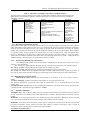
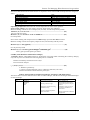
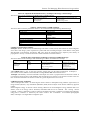
Where Vi is the applied input voltage ∆R is the variation in resistance
When a resistive type of sensor is connected to one of the arms of the bridge and if there is no variation in the
circuit, then the bridge is said to be balanced. Hence
If ∆R=0, then the output voltage (∆Vo) will be zero
If there is a variation in sensor resistance then that variation will be shown at the output in terms of voltage
reading.
∆R≠0 indicates the existence of a Voltage.
2.2 Temperature Sensors
Measuring temperature is essential in modern electronic devices, especially in laptops and in other portable
devices with densely packed circuits that dissipates power of considerable amount in the form of heat.
Temperature sensor is used for battery charging. It prevents damage to microprocessor, particularly for high
power equipments that often have fan cooling in order to maintain junction temperature at proper levels. To
control the fan properly, we need the knowledge of critical temperatures from appropriate temperature
sensor. The most popular sensors are Thermocouple, Thermistor, Semiconductor, RTD (Resistive temperature
devices), and Digital output temperature sensors. Especially temperature sensor that produce digital outputs
(Omega Engineering, 2011), are more advantageous over analog in remote applications as their readings are
more accurate and possess less affinity towards noise effects.
2.2.1
Temperature monitoring in Microprocessors
For microprocessors, supply voltage and temperature are essential parameters. In Pentium processors CPU
temperature is a critical factor. All Pentium devices have an on chip substrate on which PNP transistor act as
sensing element in monitoring actual chip temperature. The technique used to measure temperature is based on
the relation between change in base emitter voltage and the temperature.
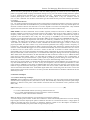
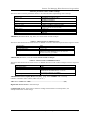
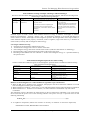
∆VBE=(kT/q)*ln(N)…………………………………………..(3)
∆VBE – change in base emitter voltage (difference between two base emitter voltages)
K-Boltzmann’s constant
T –absolute temperature
q- Charge of an electron
N-number of transistors
2.3 Inductive Sensors
These sensors are quiet more attractive in radio telemetry applications. These sensors are not affected with
dielectric properties of environment. The word inductance refers the measure of the magnetic field that is stored
for a given amount of current flow.
Factors affecting inductance are
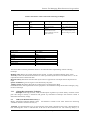
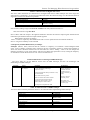
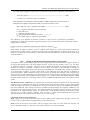
L=µN2A/L…………………………………………………..(4)
N- No of turns in a coil
µ-permeability of the core material (=µo/µr)
µ0 permeability of free space
µr relative permeability=1 for air
L -Average length of the coil
Principle:
Energy stored in an inductor is a function of current flowing through it. Corresponding to
increase or decrease in current flow through the coil, there will be change in magnetic field strength, and that
change in magnetic field strength induces a voltage drop across the output terminal of the coil. This is well
known as electromagnetic induction. In case of Self inductance the variations in any of the dimensions in the
coil induces the voltage in the same coil. In case of Mutual inductance phenomenon, the variation in dimensions
of primary coil induces a voltage in secondary coil. However the induced voltage is detected with the detector
and amplifier circuits. Inductive sensors following the Mutual inductance phenomenon is used for measuring
the change in dimensions of internal organs (kidney, major blood vessels and left ventricle.)
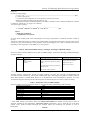
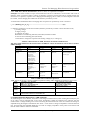
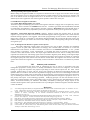
2.3.1 LVDT (Linear Variable Differential Transformer) is one such inductive type whose output is
proportional to the position of movable magnetic core. The core moves (Kesavan, 2006) linearly inside a
transformer consisting of primary and two secondary coils wound on cylindrical form.
www.iosrjournals.org
146 | Page